
Daniel Wiener: Out in Front of the Back of Beyond
April 30 – May 30, 2026
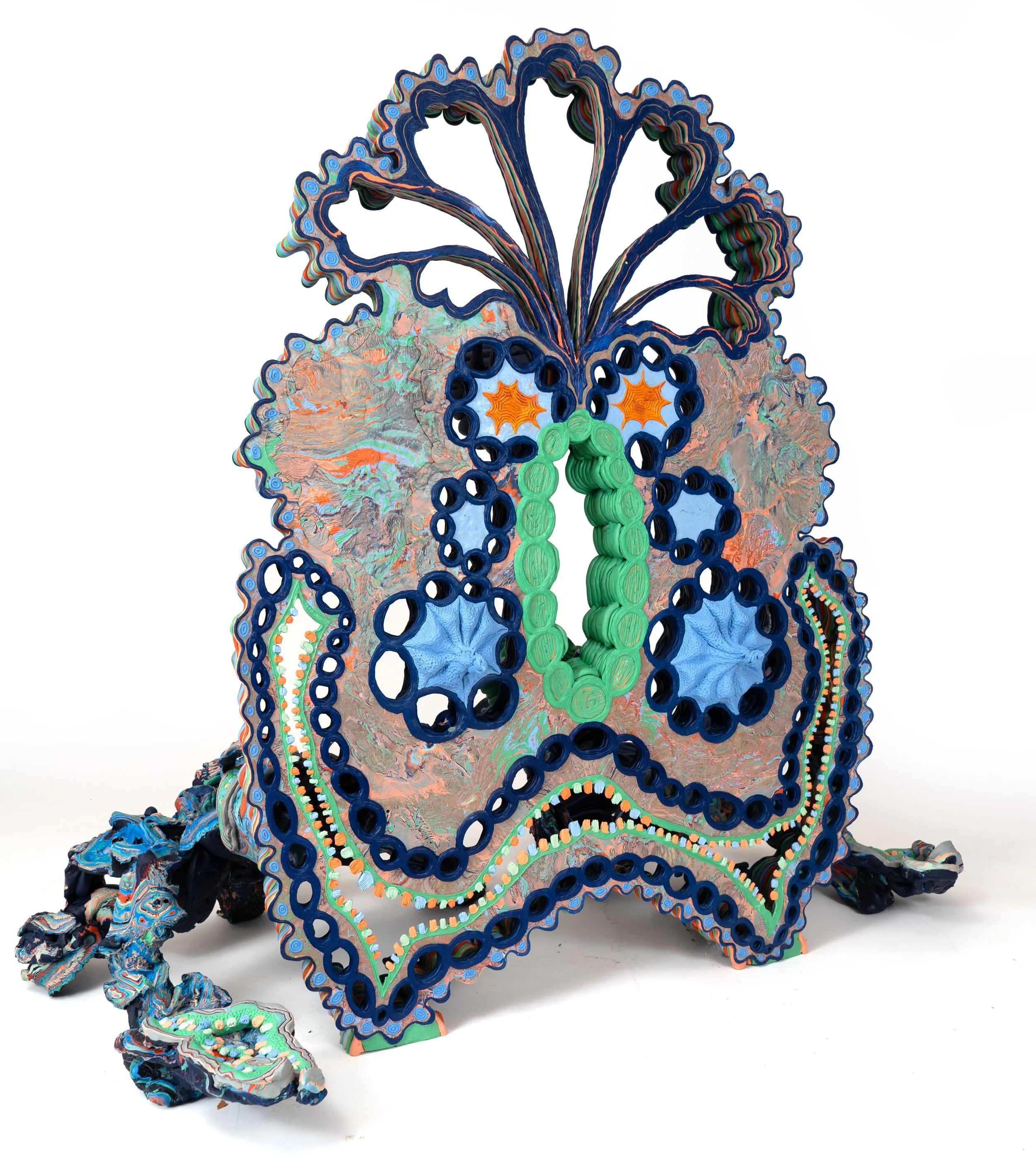
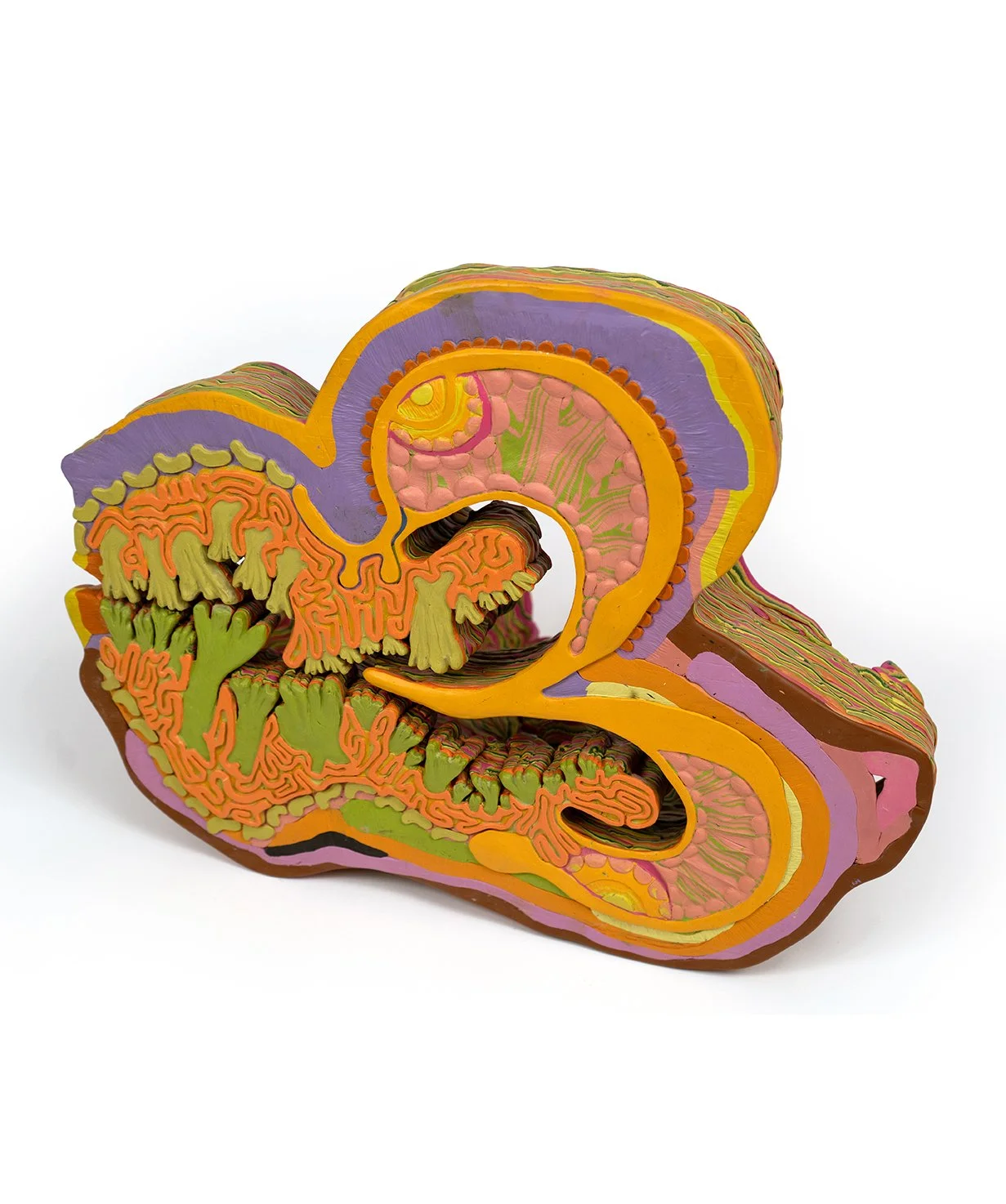
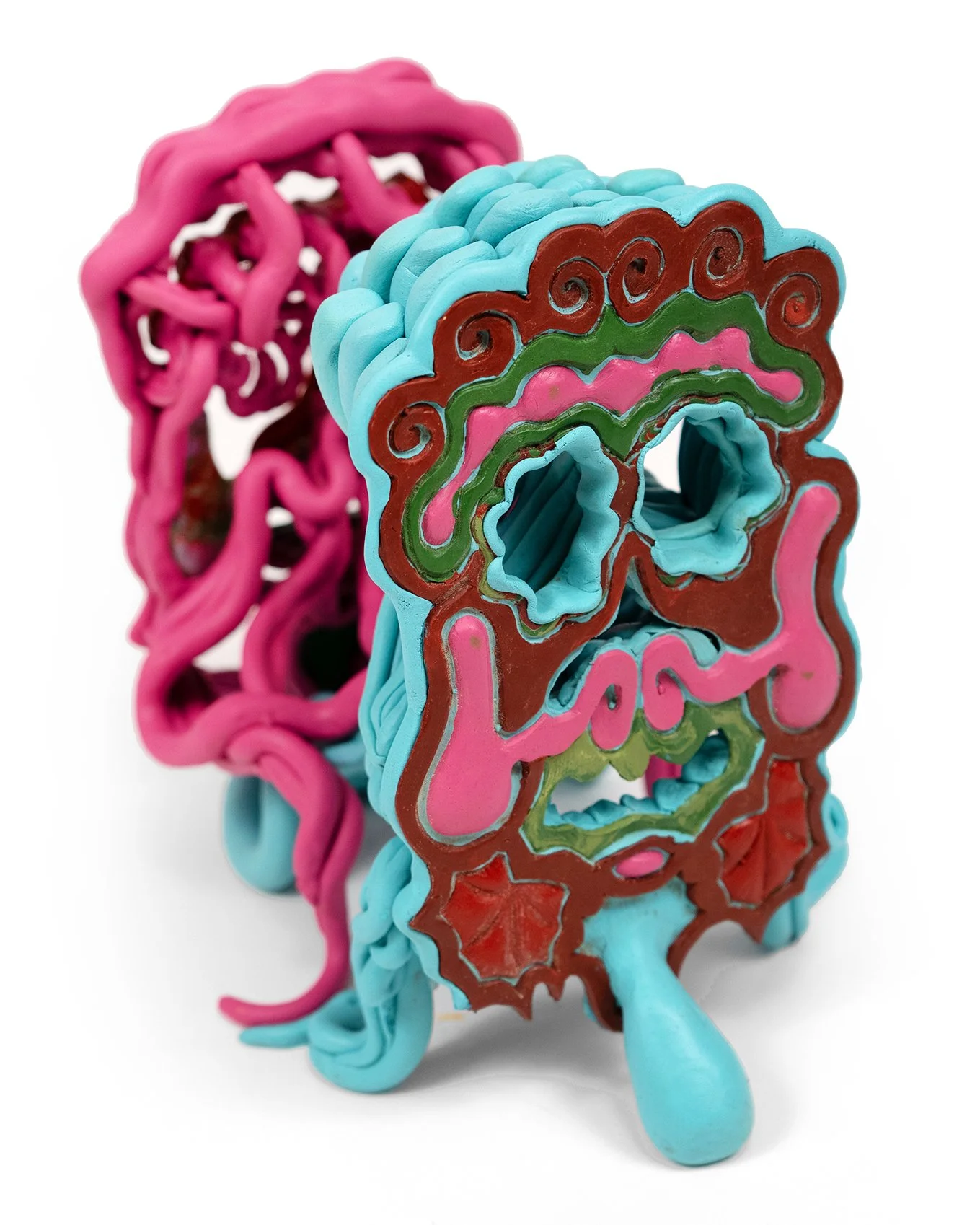

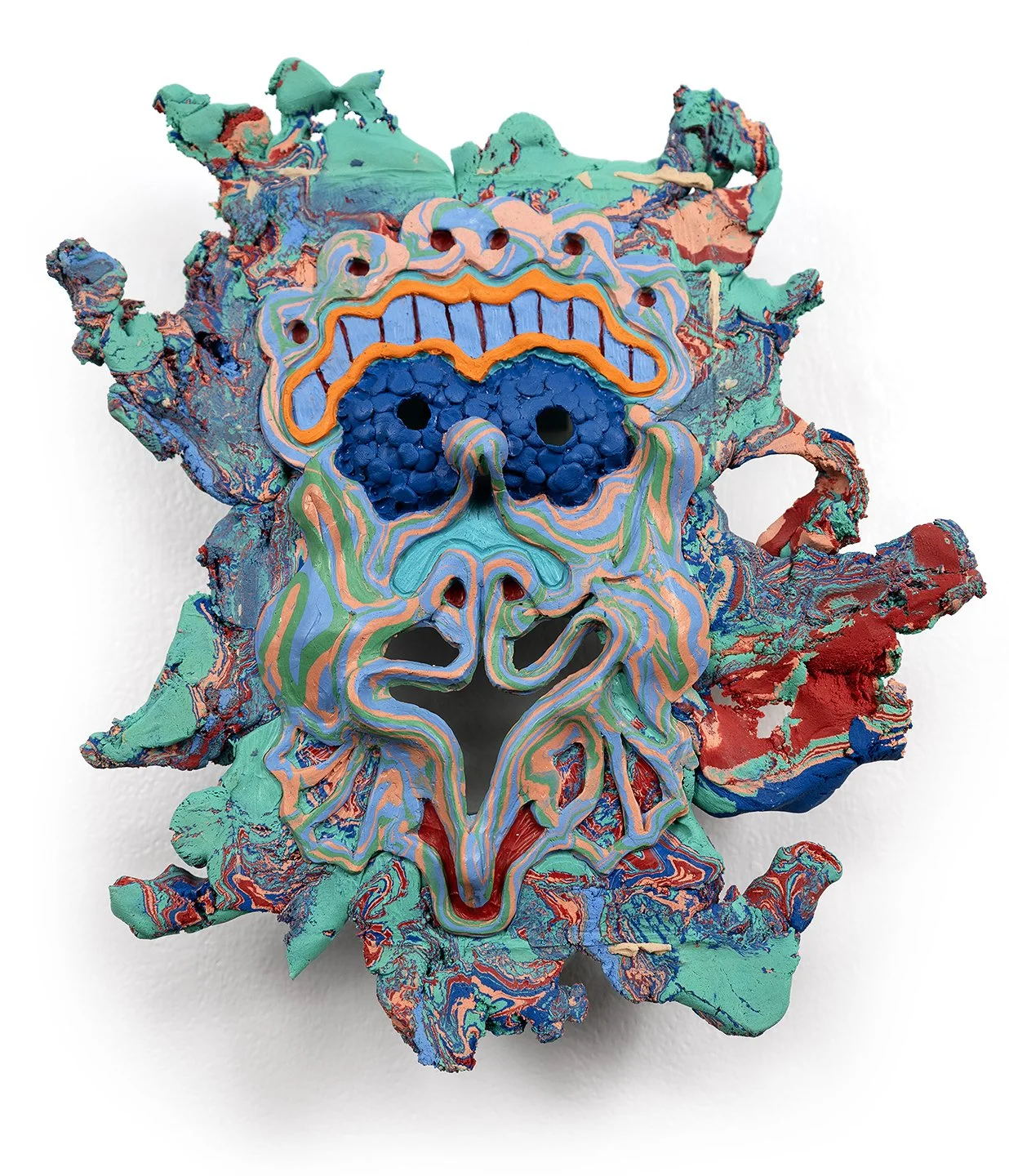
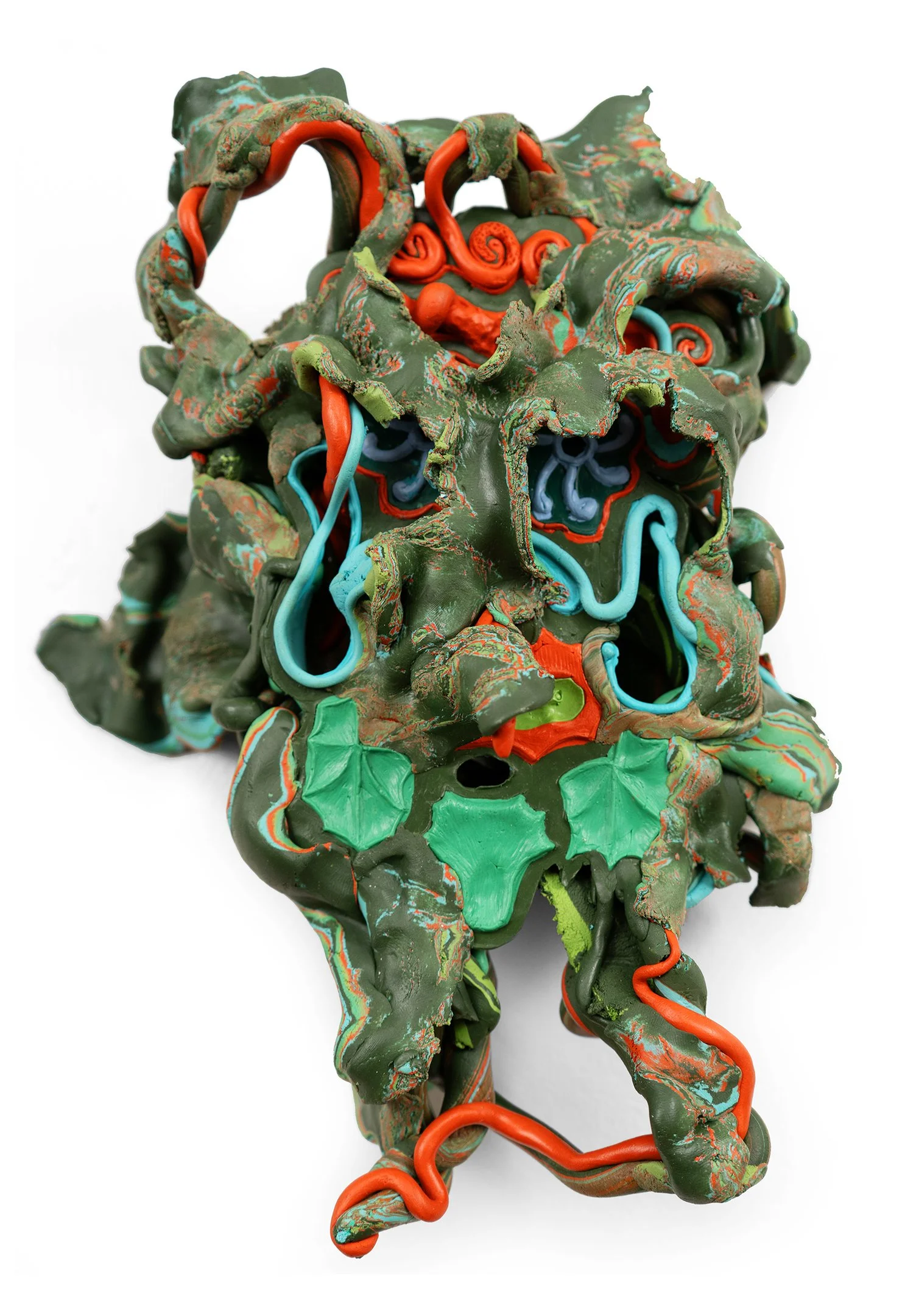
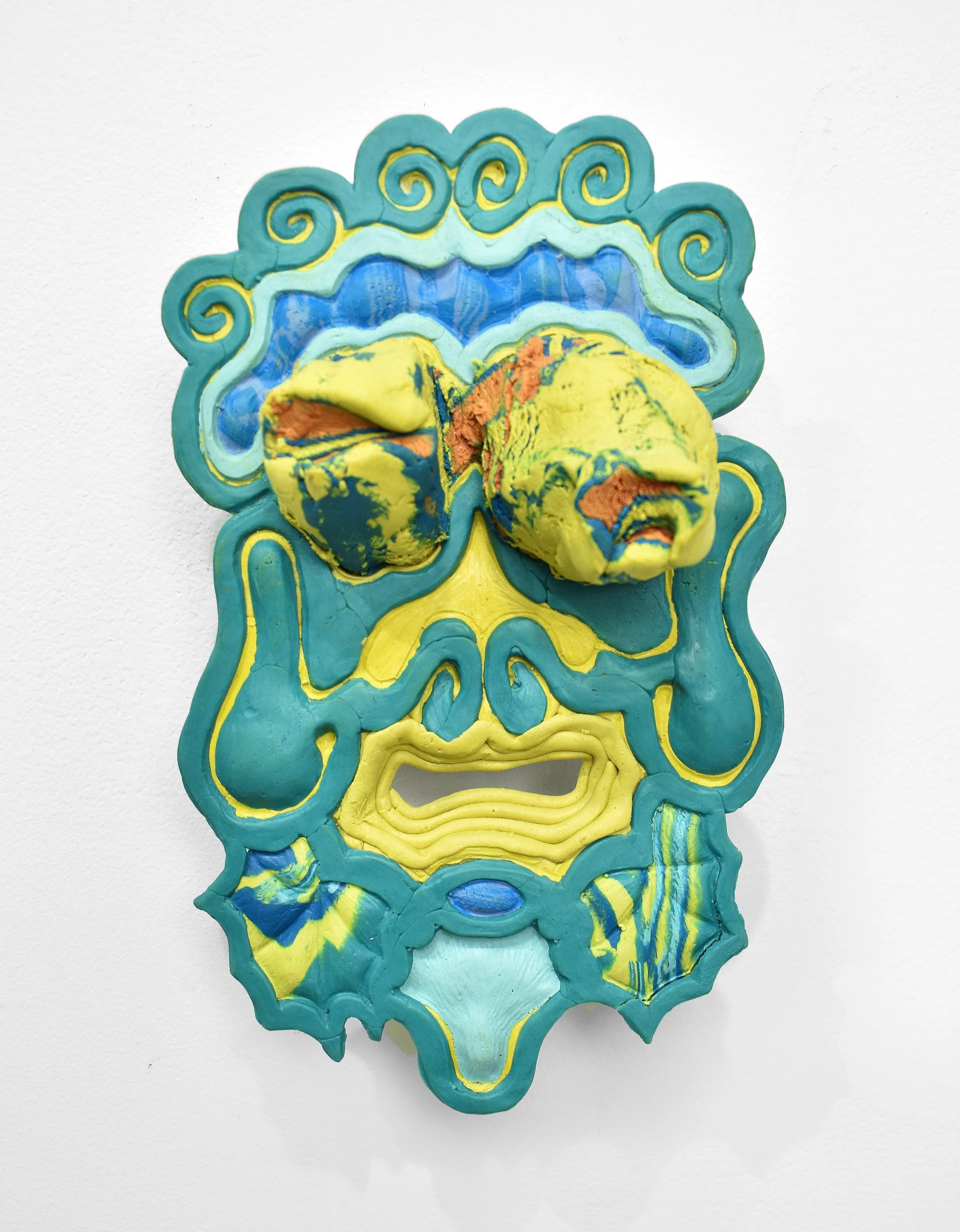
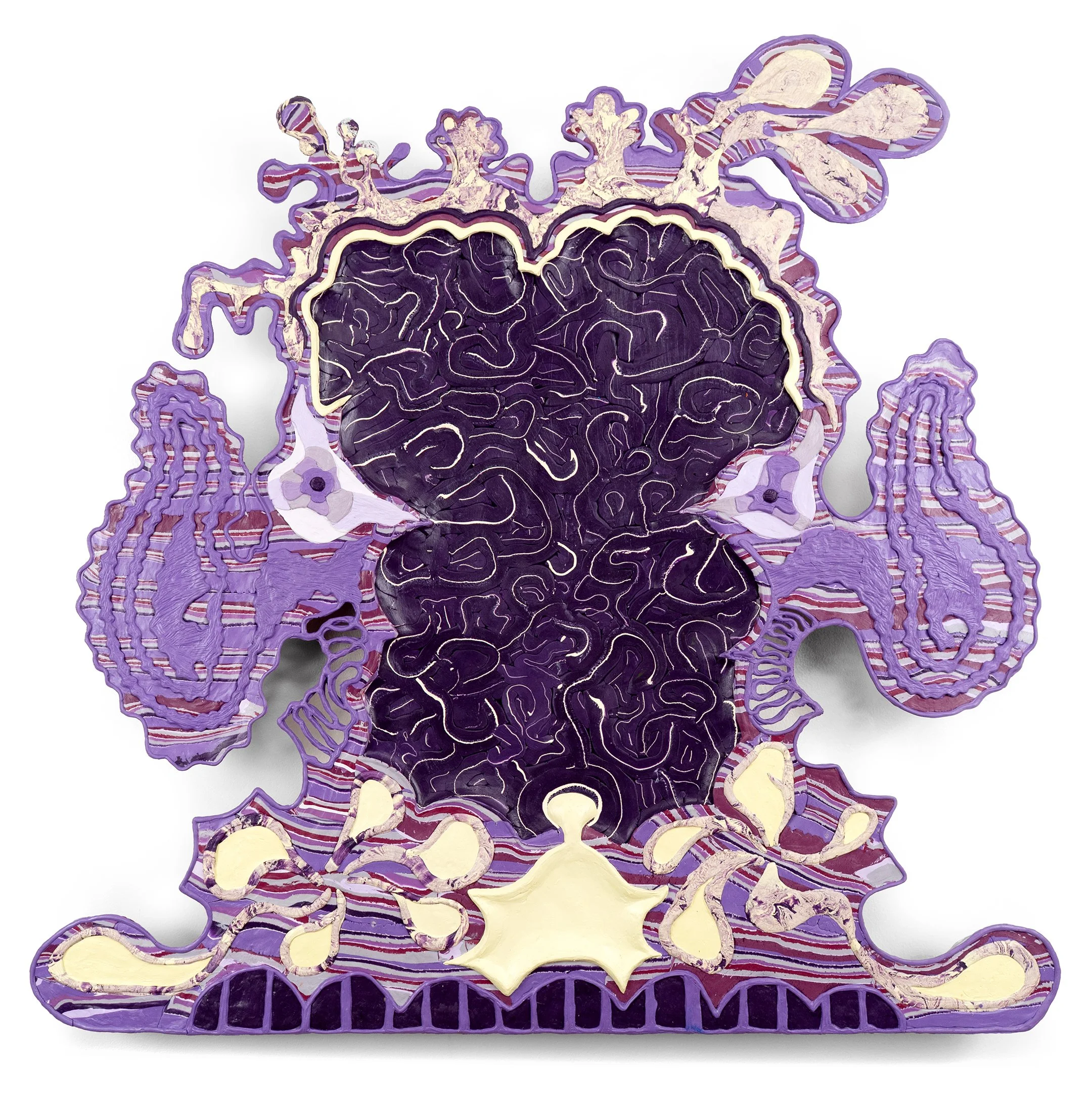
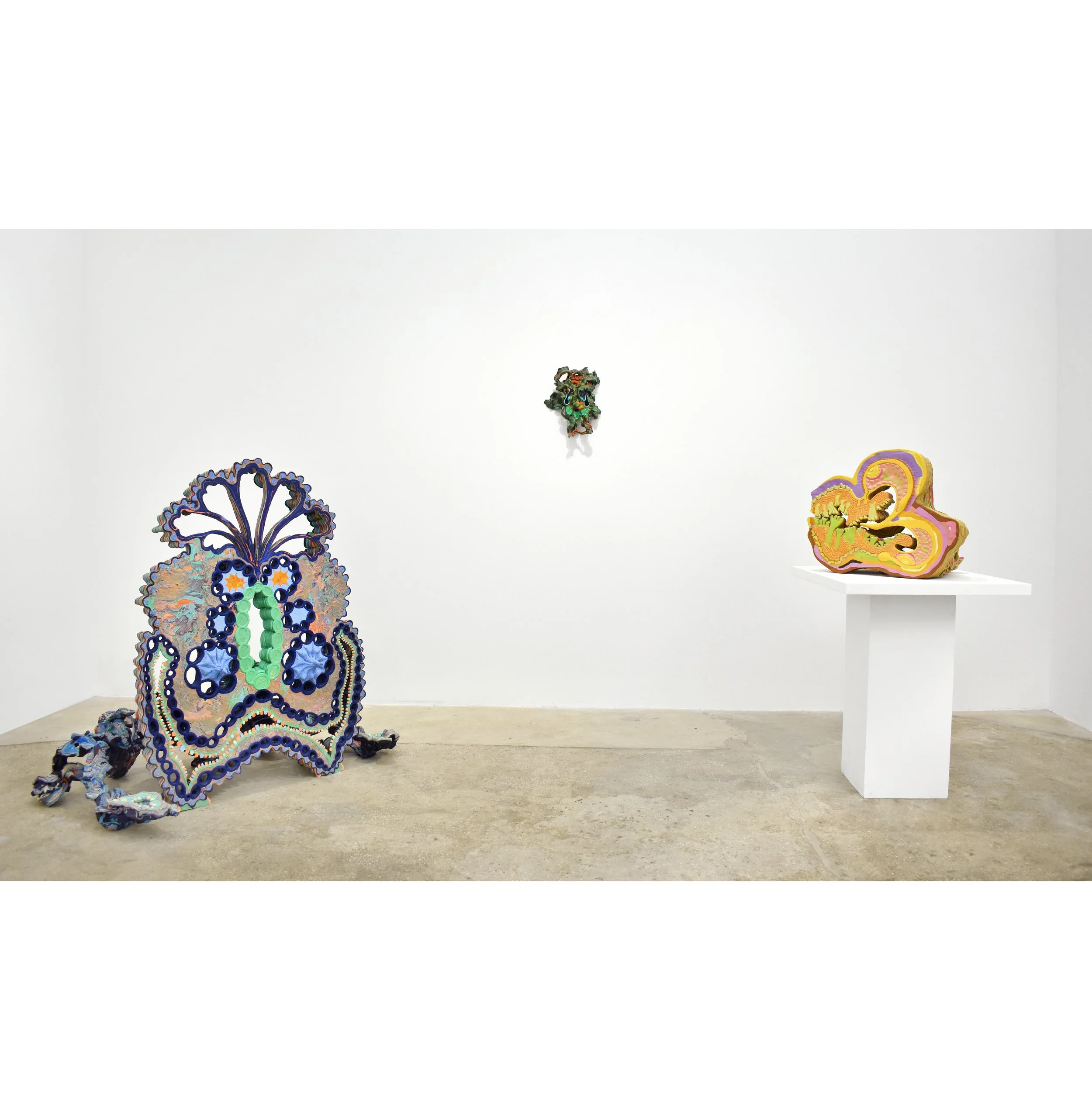
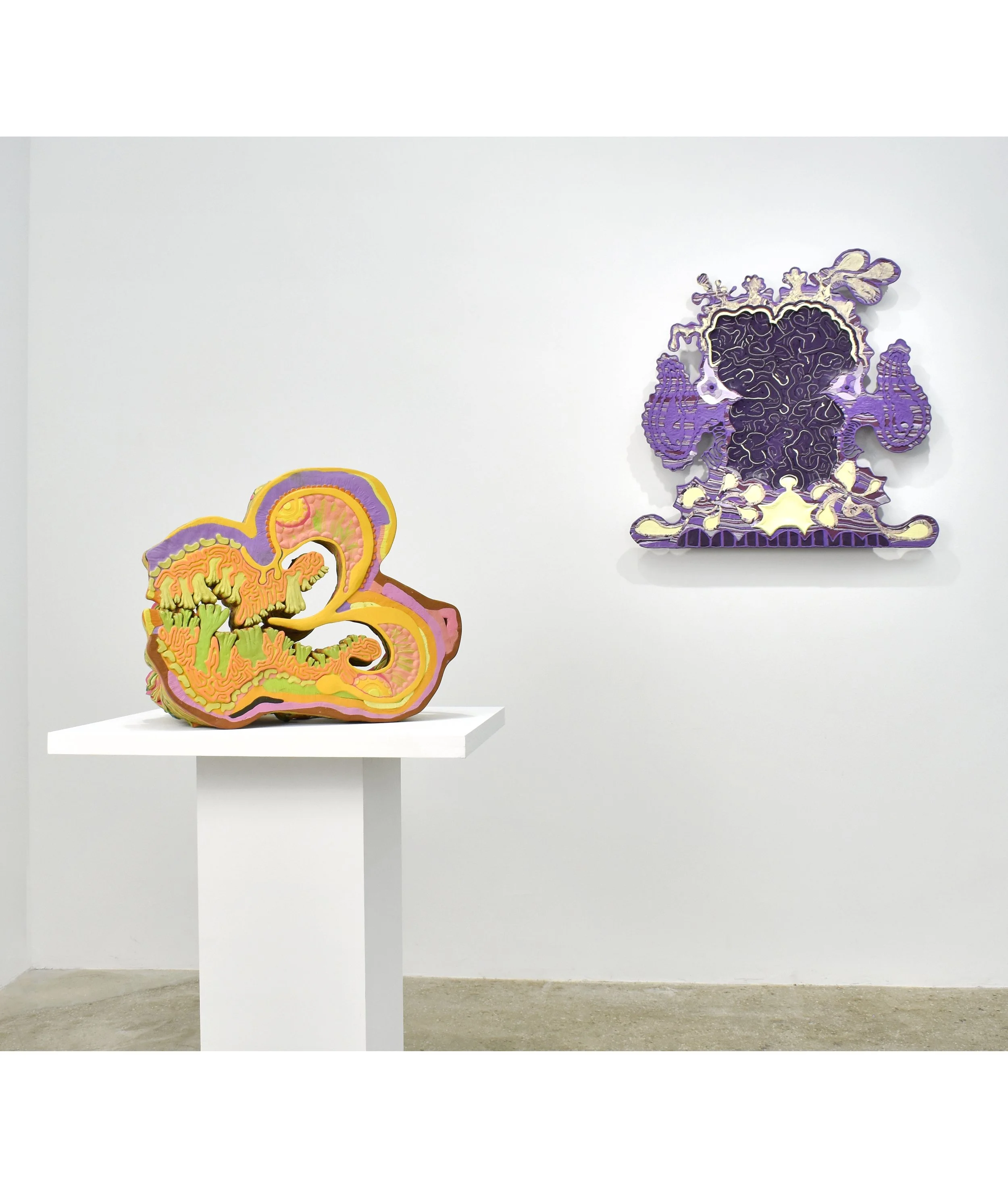
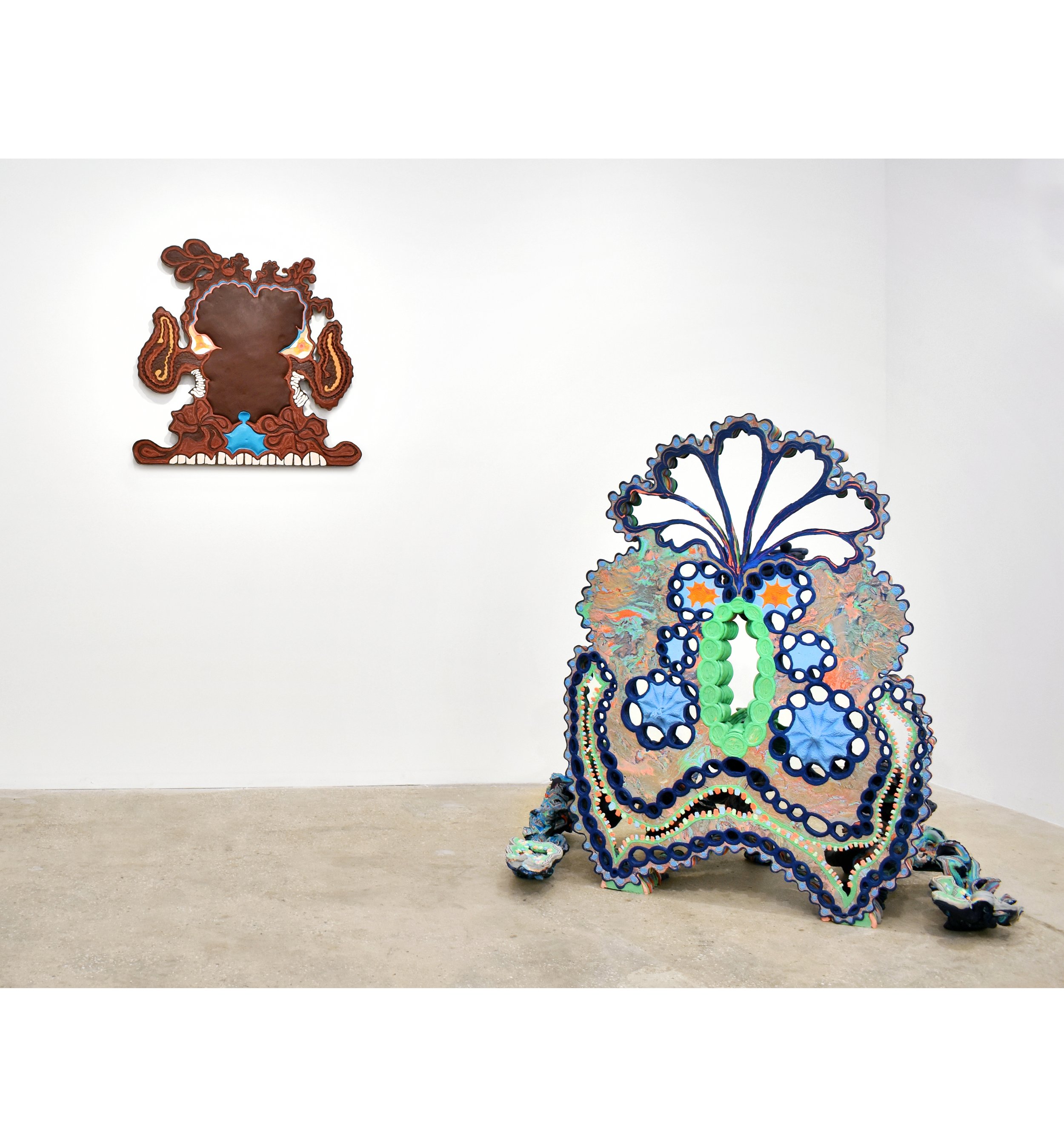
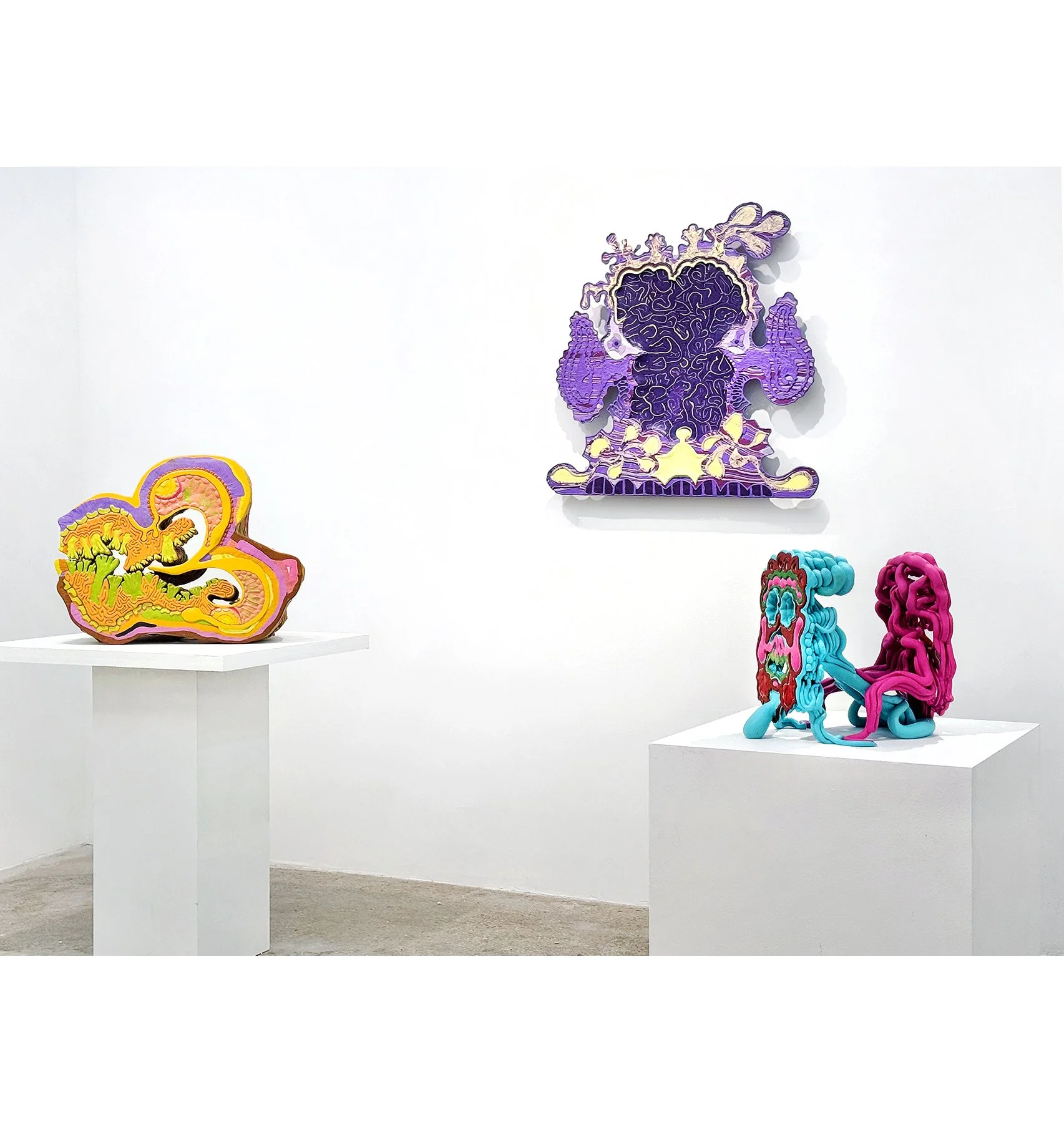
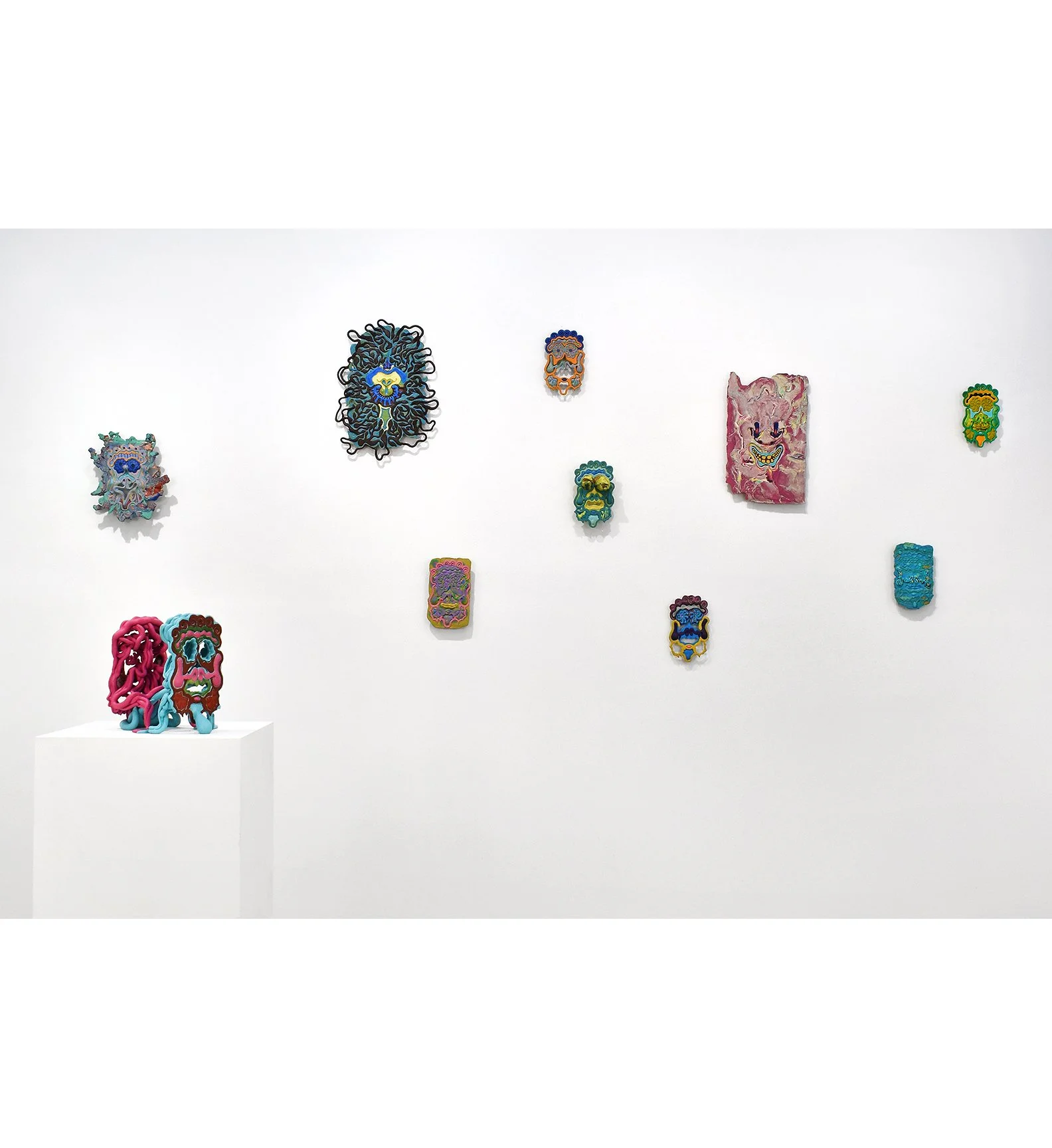
Satchel Projects is pleased to present Out in Front of the Back of Beyond, a solo show of new sculptures by Daniel Wiener, on view from April 30 through May 30, 2026. There will be an opening reception for the artist from 6–8PM on Thursday, April 30.
Featuring his signature multi-hued, viscerally evocative works, this exhibition finds Daniel Wiener pushing into new formal and metaphorical territory, playfully testing the conventions of sculpture “in the round” while excavating the space between outward display and unknowable inner complexity. Anchored by a large freestanding piece titled Polyphony Beyond the Baton’s Thrust, the exhibition also includes a selection of smaller works engaging with themes of transformation, hybridity, and recursive variation. Transgressively decorative, the works collectively grapple with the full range of psychic life — delight, humor, fear, and loss.
Daniel Wiener has a well-established reputation for irrepressible inventiveness and virtuosic command of his medium. His expansive, category-defying works have ranged in scale from the tiny and intimate to room-sized installation, moving freely among references that include anatomy, fantastic geological formations, and reimagined domestic objects. Around 2008, faces began to coalesce and emerge within his work and have remained a consistent presence ever since. In the artist’s words,
“The creation of mask-like wall reliefs has now become a large part of my studio practice, augmenting the ‘exquisite turbulence’ (to borrow from Ensor) of my already baroque sculpture. I seek to craft work that is intricate and vivid, that exposes and obscures emotion at the same time.”
In the process of creating his wall reliefs, Wiener found their backs increasingly compelling. While constructing their more deliberate, outward-facing visage, he noticed a corresponding, more unruly countenance emerging on the reverse, asserting itself as integral to the totality of the piece and entering into a dialogue with its front-facing counterpart. This development brought the reliefs off the wall and into the room, finding their new form: freestanding sculptural works with a front and a back. Revealing both sides of the pieces opened up a rich field of possibilities for Wiener to dig into notions of duality, interiority, and what is hidden versus what is revealed.
Psychology runs as a deep current through Wiener's work. Among his touchstones is the British psychoanalyst Donald Winnicott, whose idea that the imagination is rooted in loss finds a particular resonance in the restless generativity of Wiener's practice. He elaborates,
“I am interested in this absence, or sense of loss, that is at the heart of the imagination, of daydreaming. Winnicott once said that thumb-sucking is the first act of the imagination, which not only suggests the primacy of the imagination in human development but also its origination in loss. I think this gets at the energy of my work, the constant need I have (that we all have) to make things up. The endlessness of the imagination, I think, is reflected in the endlessness of my sequences.”
A related motif in Wiener’s work is recursion — the folding of one structure into another, as in Russian nesting dolls. Through casting, he is able to produce multiple iterations from a single mold, generating sculptural variations on a theme. As he notes,
“I think there is some recursion in what I do, when I make a mold within a mold. It’s an aspect of imagination, trying to create variety from sameness. There’s a feeling of a world being within a world within a world. It also relates to the relationship between front of the face and the back of the face. Poetically and intellectually, they feel connected.”
Language and sculpture have a reciprocal, generative relationship in Wiener's practice. His titles, often drawn from poetry — among them Polyphony Beyond the Baton's Thrust, sourced from Wallace Stevens — set a conceptual and emotional frequency for the work they name. A conductor's baton describes an axis of control, and as polyphony is “beyond” the known and proscribed system, Wiener's sculptures generate their most vital energies in the spaces outside the received organizing principle — in their exaggeration, their turbulence, in the passages of pure abstraction that surge between and around recognizable forms. Those recognizable forms — a face, a vessel, a tabletop — are what Wiener describes as visual resting places, anchors that ground the viewer enough to make the wilder abstract passages legible, or at least traversable. The work thus operates something like a language with its own grammar: fixed points of recognition that make productive the surrounding fields of the unknown.
Daniel Wiener (b. 1954) is a visual artist originally from Los Angeles, California who has lived and worked in NYC for the last forty-one years. Wiener first exhibited his work with the former Stephen Wirtz Gallery in Oakland shortly after graduating from the University of California at Berkeley. He is also an alumnus of the Whitney Museum Independent Study Program (1983). Wiener has since exhibited nationally and internationally, most notably with Tibor de Nagy, White Columns, Casey Kaplan, Bravin Post Lee, Pierogi, Acme Gallery, Fiorella Lalumia Studio (Milan), The Living Room (Amsterdam), MoMA PS1, Sculpture Center, Oakland Museum, Nevada Institute of Contemporary Art, and the inaugural BRIC Biennial. Recent solo exhibitions include At Home With Scallywags and Rapscallions at Pamela Salisbury Gallery (2022) and Wide-eyed & Open-mouthed at Lesley Heller Gallery (2019). Wiener is a recipient of the Guggenheim Fellowship, New York Foundation Grant, Tree of Life Grant, and UCross Residency Albert Award. He has also been in residence at Yaddo, MacDowell Colony, Pilchuck, and Dieu Donne Workspace. His work has been widely written about across numerous publications including BOMB, Hyperallergic, Art in America, The New York Times, Sculpture Magazine, Artspiel, BK Mag, Gorky’s Granddaughter, and The Los Angeles Times. Notable reviews include those written by Roberta Smith for The New York Times and Amy Sillman for ThingReviews. Wiener was represented by Lesley Heller Gallery in New York until their closure in 2020. He currently lives and works in Boerum Hill, Brooklyn.