
Composite World
A Group Exhibition of Contemporary Collage
curated by Paul Loughney
June 4 – July 2, 2026
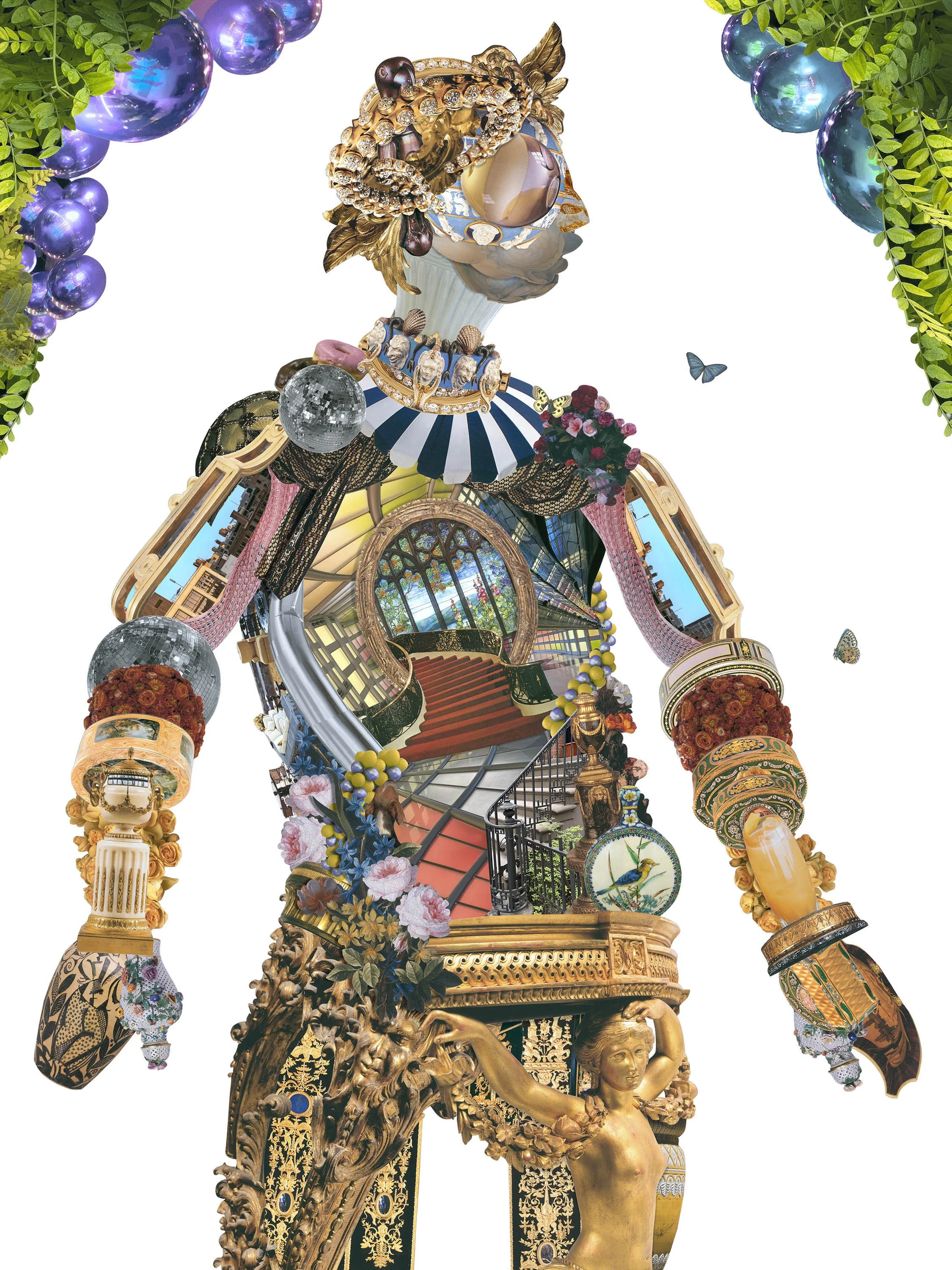
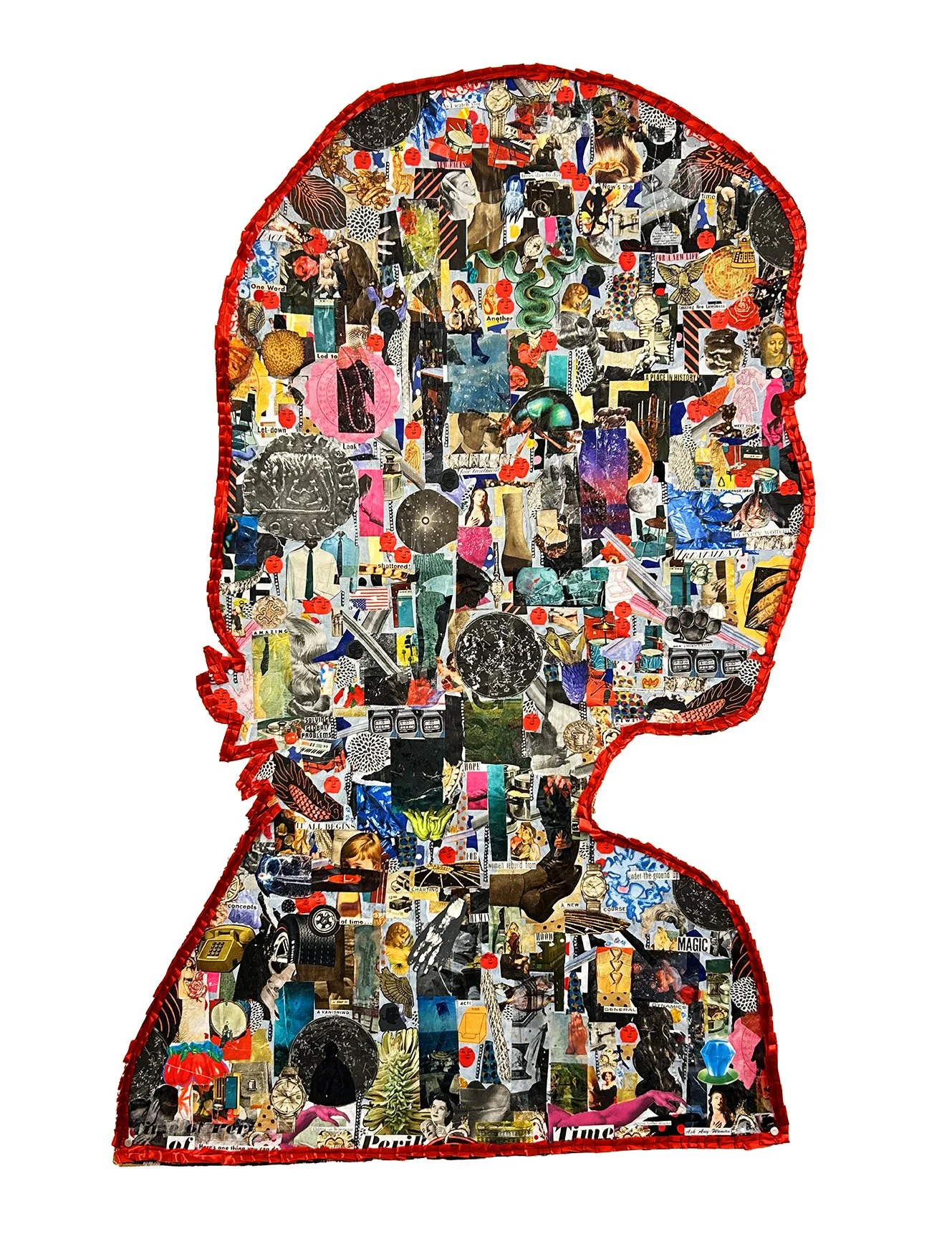
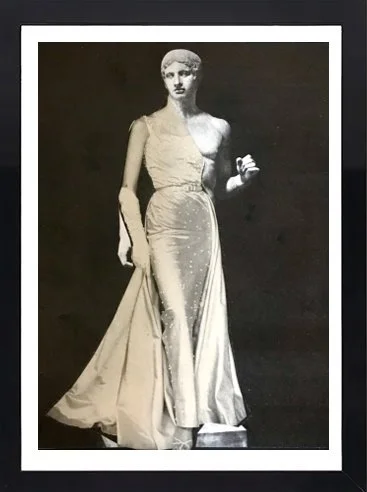
Satchel Projects is pleased to present Composite World, a group exhibition on view from June 4 through July 2, 2026. Curated by Paul Loughney, Composite World brings together seven artists whose distinctive bodies of work reveal collage’s rich formal and conceptual possibilities. The show includes works by Andrea Burgay, Andrés Gamiochipi, Eva Lake, Paul Loughney, Steven Rudin, Paloma Trecka, and Rochelle Voyles. There will be an opening reception on Thursday, June 4 from 6-8 PM.
In an era of relentless digital image circulation, the artists in Composite World turn to the tactile act of cutting, collecting, and recombining printed matter. Working primarily with analog collage, they find and reassemble magazines, photographs, advertisements, and other forms of ephemera into new embodied forms, dislocated from their original contexts and set into newly dynamic relations. Collage operates as both method and metaphor: a means of constructing images while exposing their underlying structures. Through acts of isolation, rearrangement, and juxtaposition, these artists disrupt the narratives embedded within mass-produced imagery, allowing unexpected relationships between figures, objects, and spaces to emerge.
In these works, the familiar becomes untethered and fluid. A hand, a landscape, a pattern, a face — each fragment carries traces of its previous life yet acquires new meaning through proximity to others. Compositions emerge through accumulation and editing: a careful negotiation between what is gathered and what is withheld.
The exhibition’s title gestures beyond the mechanics of collage toward the ways identity itself is formed. Like these images, our sense of self develops as a composite structure, shaped over time through layers of memory, influence, environment, and encounter. Experiences adhere like fragments: some seamlessly integrated, others leaving visible edges. Composite World proposes that both images and identities are assembled rather than fixed, continually revised through the fragments we choose to carry forward and those we allow to fall away.
-Paul Loughney
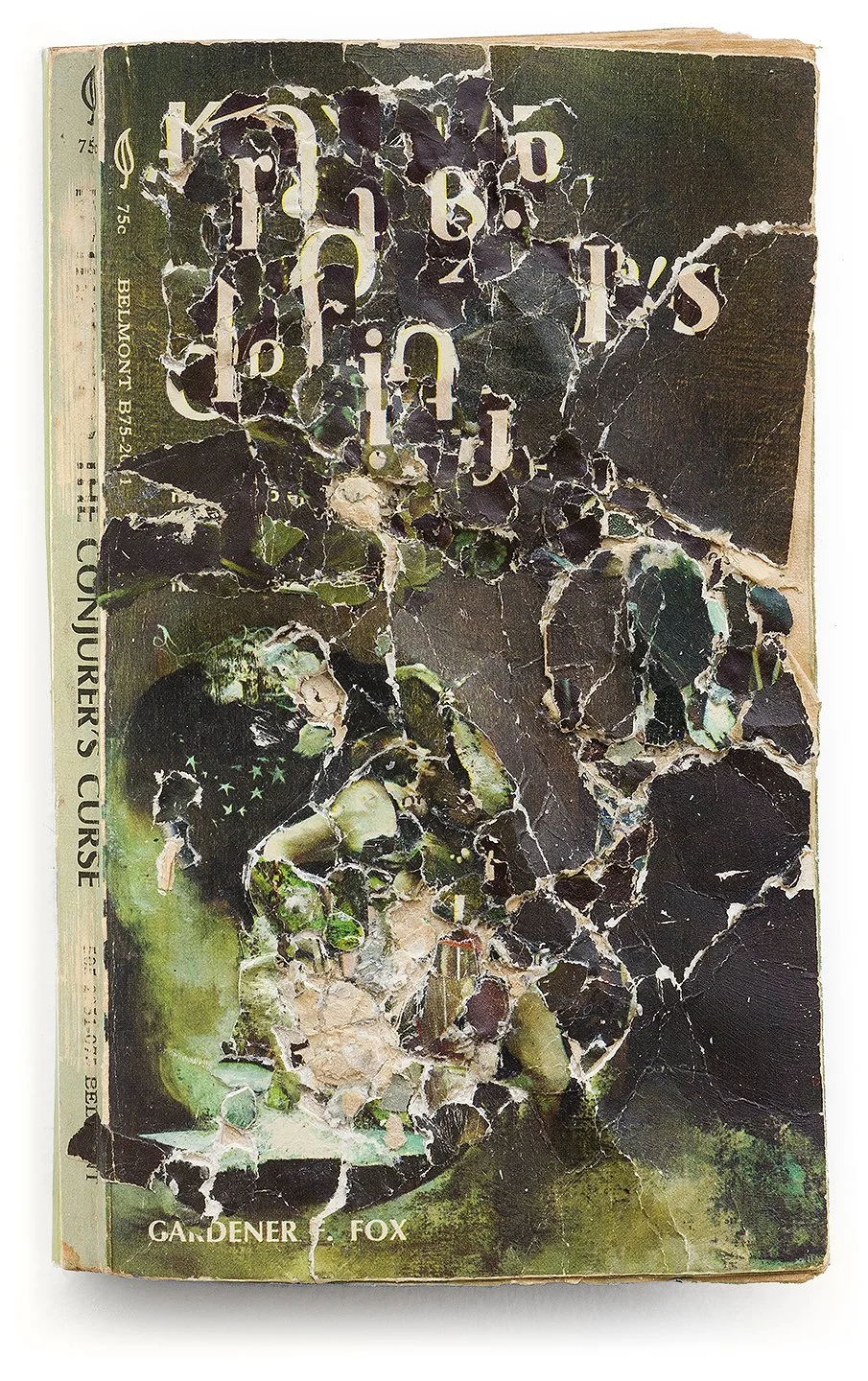
Andrea Burgay’s collage-based works explore the physical manifestation of time and evoke cycles of destruction and renewal. Using collected paper, she builds layered compositions that are then deconstructed and reassembled, in a process that mirrors the themes within the work. Burgay is also the founder and editor of Cut Me Up Magazine, an ongoing curatorial project in which readers deconstruct and transform published artworks in response to curatorial prompts addressing contemporary issues. In 2026, Burgay is co-organizing Making Meaning: A Collage Symposium with Monica Church. This event will explore new perspectives in collage’s history and contemporary practices. Burgay lives and works in Brooklyn, NY.
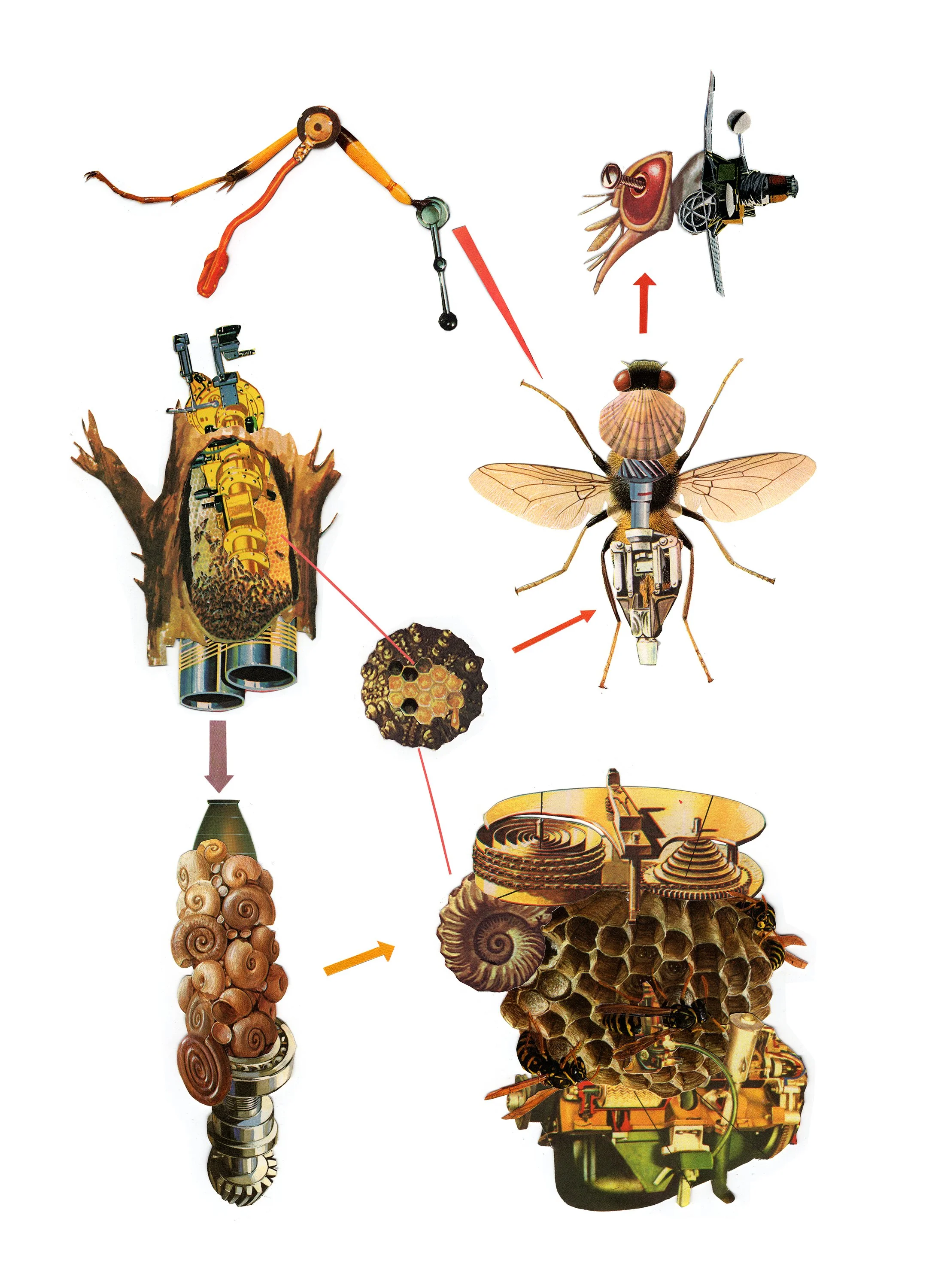
Andrés Gamiochipi is a multidisciplinary visual artist from Mexico City working across collage, painting, muralism, photography, and design. Using fragments of printed imagery, he builds compositions that echo the logic of scientific illustration while subtly destabilizing it. By recombining botanical, mechanical, and biological elements, he produces hybrid forms that resist fixed classification. These works function as speculative systems, ordered yet unsettled, where meaning emerges through a combination of pattern, mutation, and recombination.
Eva Lake‘s photomontages operate at the intersection of desire, identity, and history. A longtime student of ancient art history and archaeology, Lake recombines appropriated images of fragments of ancient sculpture with idealized imagery of midcentury women, collapsing time and suggesting a parallel between the stony, armless sculptures and the rigid roles and expectations of traditional femininity. These hybrid beings evoke the collages of Hannah Höch, in which bodies are split, grafted, and reassembled, oscillating between elegance and rupture. Her work examines how identity is constructed through images, where cultural ideals of beauty becomes both signifier of desirability and a site of fracture. In Lake’s compositions, the body is not fixed, but continually negotiated across time, reference, and representation. Lake has exhibited internationally since 1980 and lives and works in Portland, Oregon.
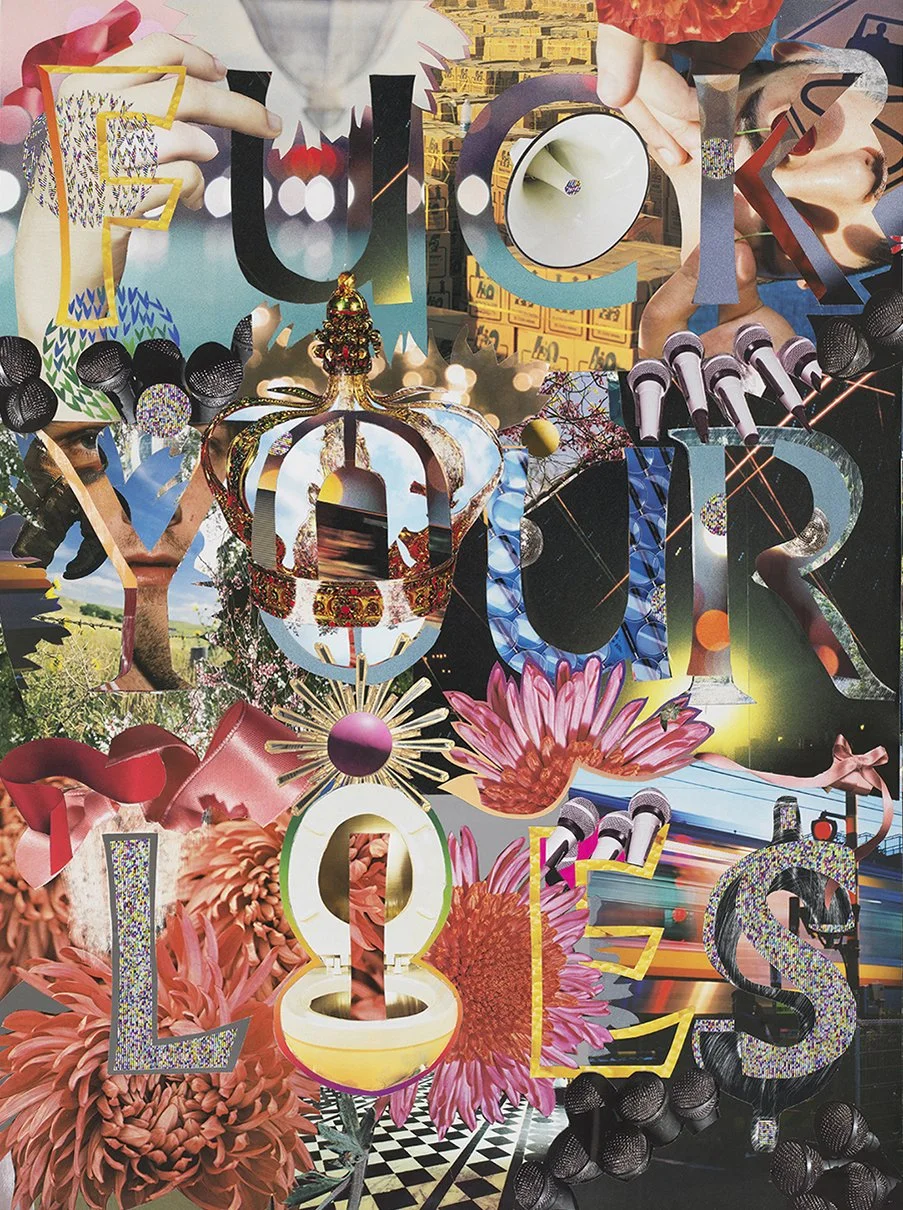
Paul Loughney creates densely layered collages in which text and image converge to examine how language operates as a system of influence and control. Drawing from the visual languages of propaganda, advertising, and self-help culture, his work stages environments where slogans, commands, and repeated phrases are amplified, fractured, and reabsorbed into the image. Working exclusively with imagery sourced from contemporary magazines, Loughney approaches collage as a process of excavation and recombination. This found imagery is treated as an anthropological record of collective desire, ideology, and cultural myth. Visual fragments are disrupted and recombined, with chance playing a central role in the production of meaning. The compositions unfold as dense visual fields in which language becomes material while meaning remains unsettled. Throughout, the mechanisms that shape perception are not simply exposed but amplified, producing images that oscillate between seduction and control. Loughney lives and works in Brooklyn.
Steven Rudin’s hand-cut collages assemble figures from an accumulation of decorative, domestic, and historical fragments. Bodies are constructed from furniture, objects, interiors, and ornament, forming hybrid entities that hover between figure and environment, character and structure. Balancing precision with a sense of play, his compositions unfold through symmetry, layering, and careful alignment. Meaning emerges through recombination, as familiar elements are reorganized into new configurations that generate personality, narrative, and system simultaneously. His work reflects an ongoing interest in how images and identities are built from parts, where the same materials can be assembled to produce entirely different forms. Rudin lives and works in NYC.
Paloma Trecka‘s work engages a lineage of geometric abstraction, with affinities to Kurt Schwitters, Conrad Marca-Relli, and Eduardo Paolozzi. Color is informed by her connection to Mexico, while Chicago shapes her engagement with the grid, line, and architectural texture. Beginning in the 1990s, she expanded her practice into stop-motion animation, activating collage through time, sound, and repetition. The push–pull dynamics of abstraction and the rhythmic logic of the grid function as both visual and auditory structures. She is an artist and educator based in Chicago.
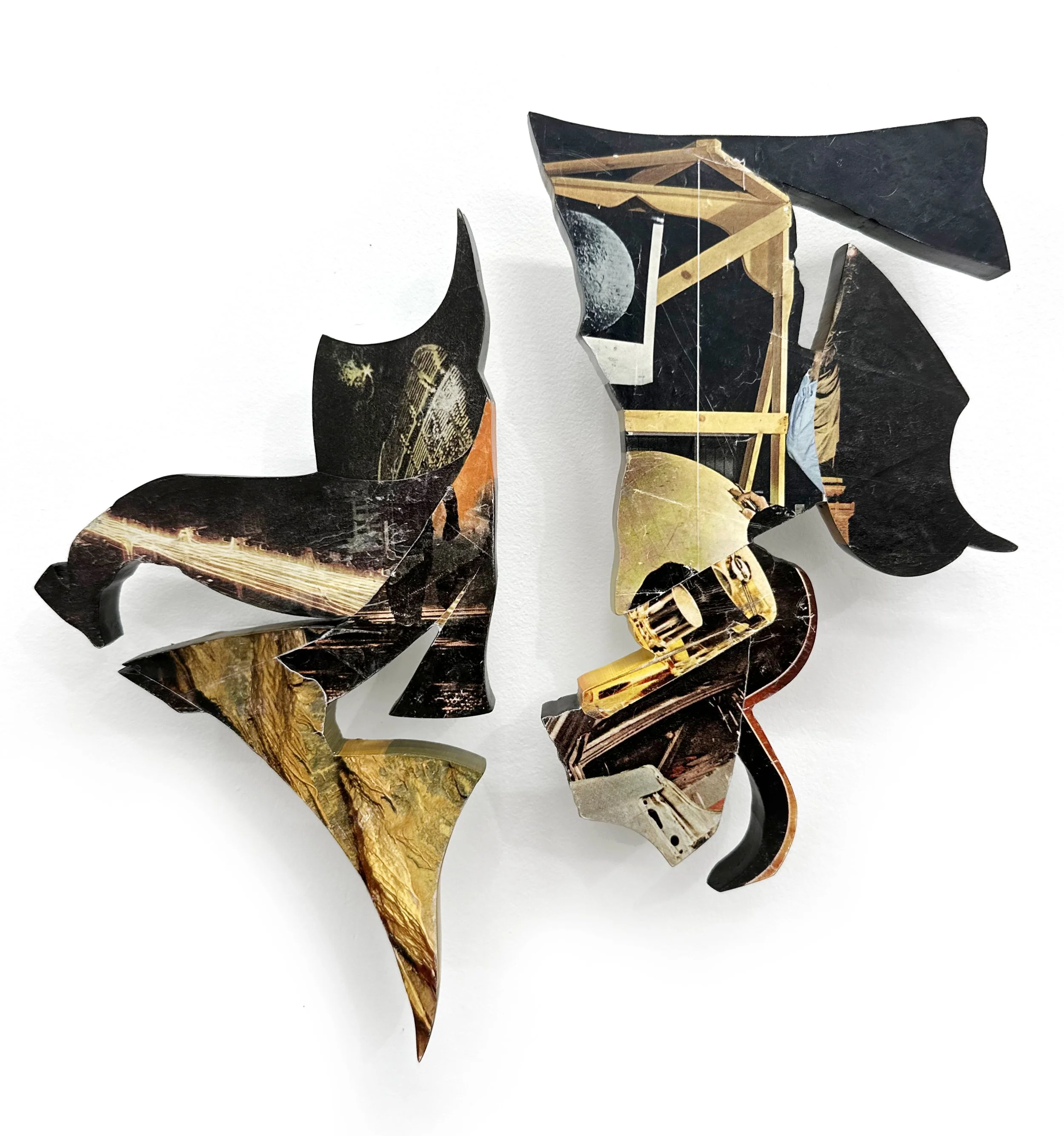
Rochelle Voyles is a Brooklyn-based multidisciplinary artist whose work examines recurring patterns in human behavior and the systems that underlie them. Drawing from historical textile diagrams and found imagery, she constructs collage-based shaped wood sculptures in which images are cut, looped, and reassembled into continuous, interlocking forms. These works extend collage into its architectural surroundings, using negative space, repetition, and structure. In these hybrid pieces, the sculptural form becomes as significant as the images themselves. Fragments are redistributed across the surface, disrupting linear narratives and emphasizing cyclical movement, accumulation, and return. Through this process, Voyles questions how images, and the patterns they contain, shape our understanding of collective experience.