
Clare Kambhu: Manual Entry
March 26 – April 25, 2026
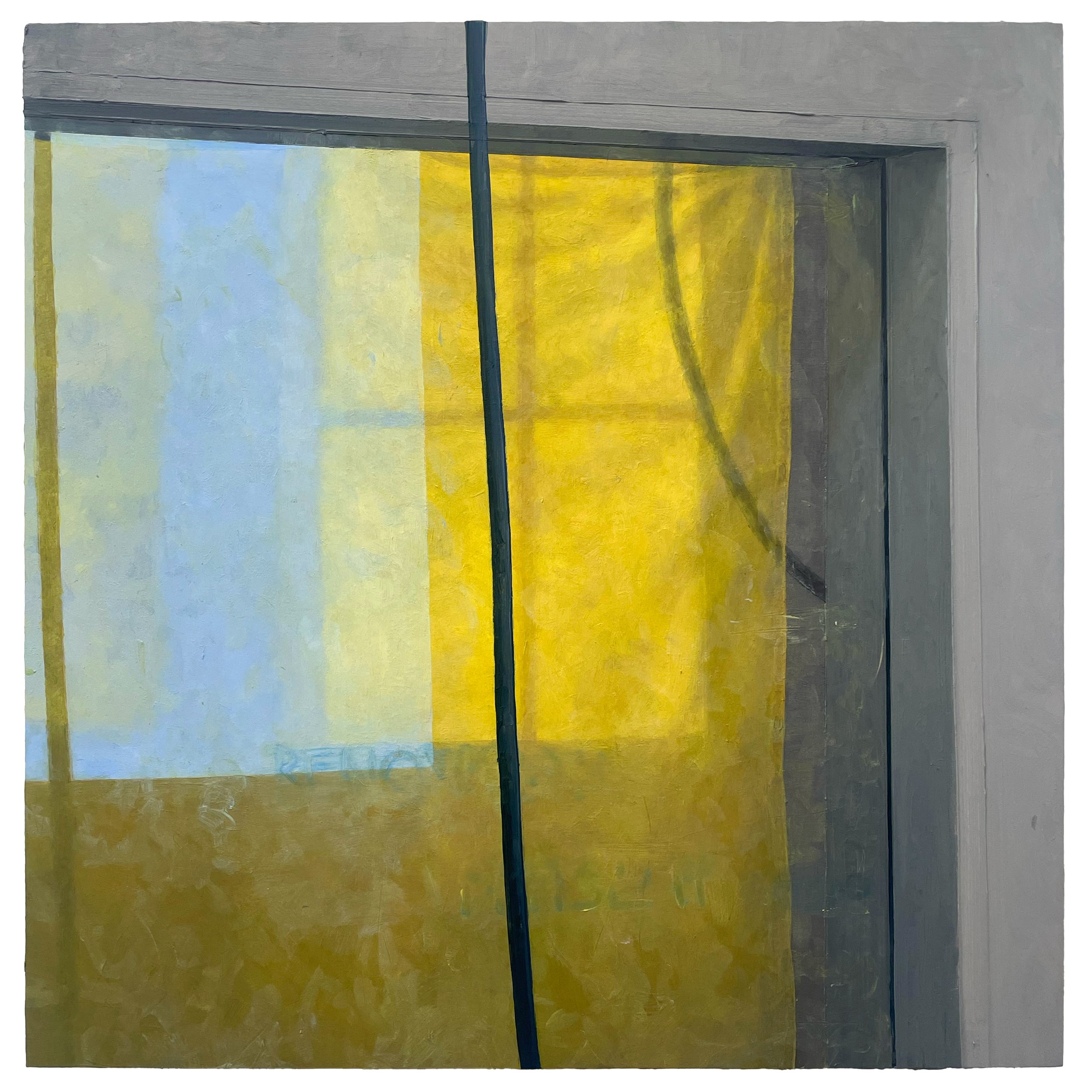
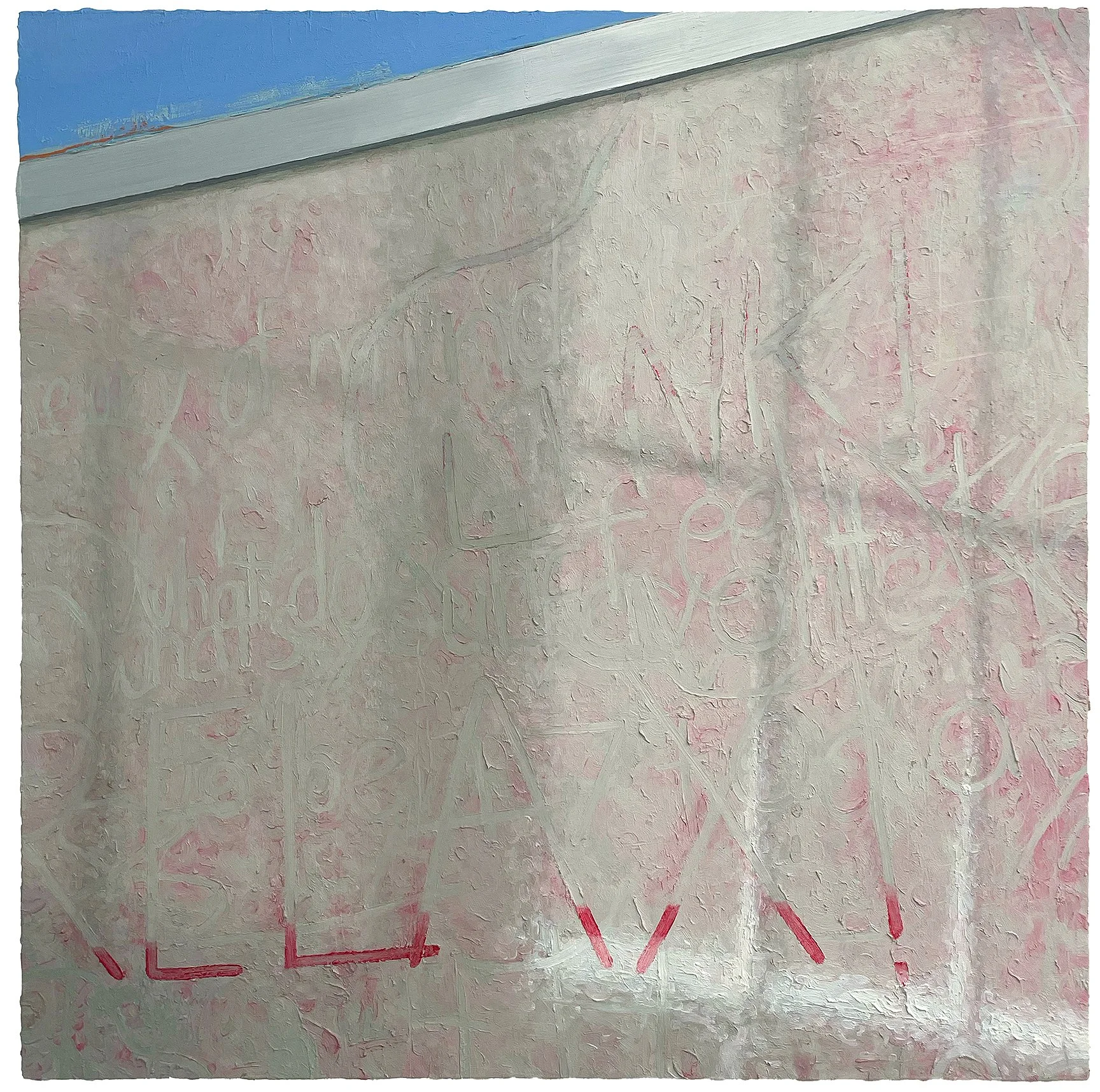
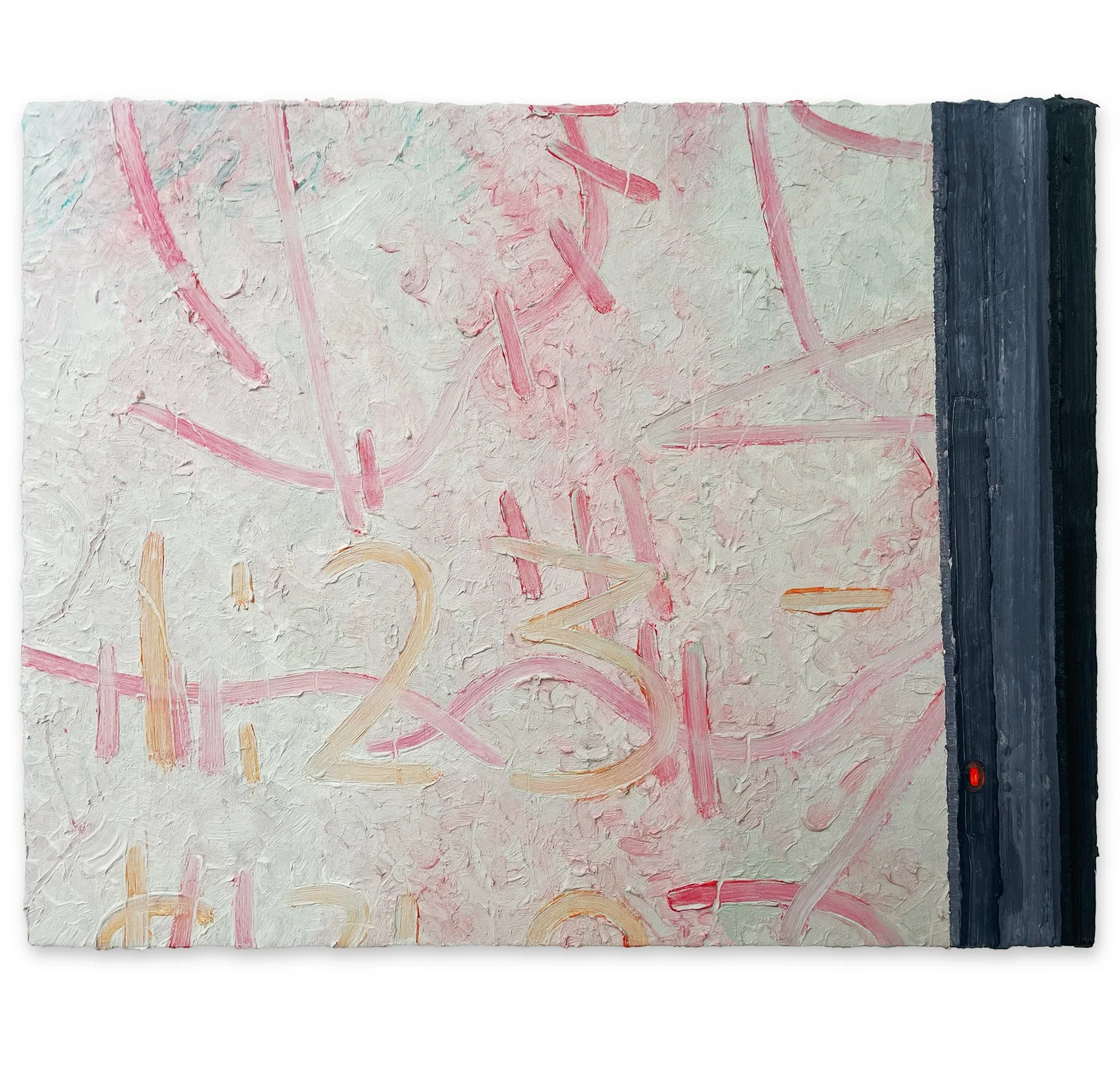
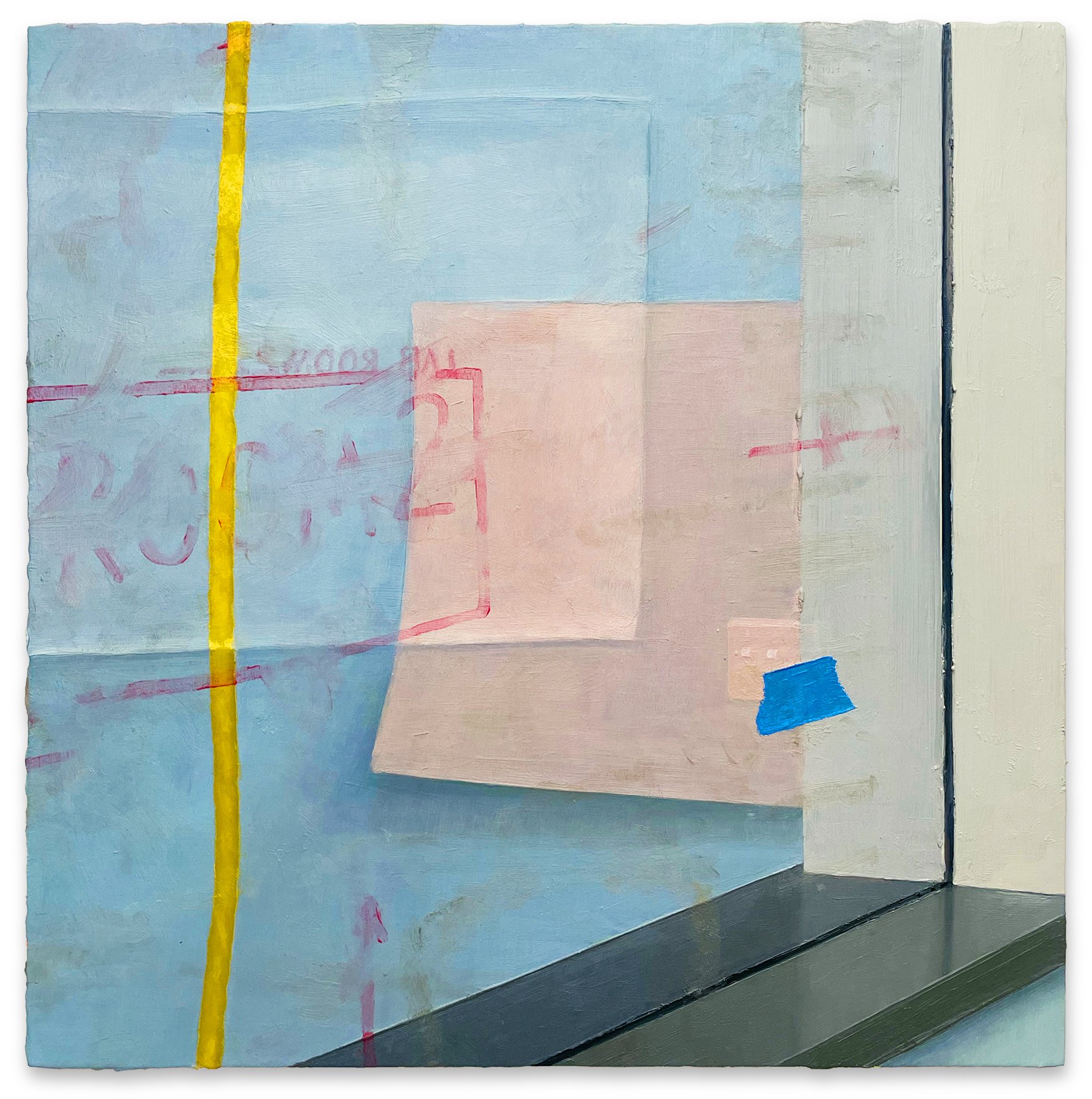
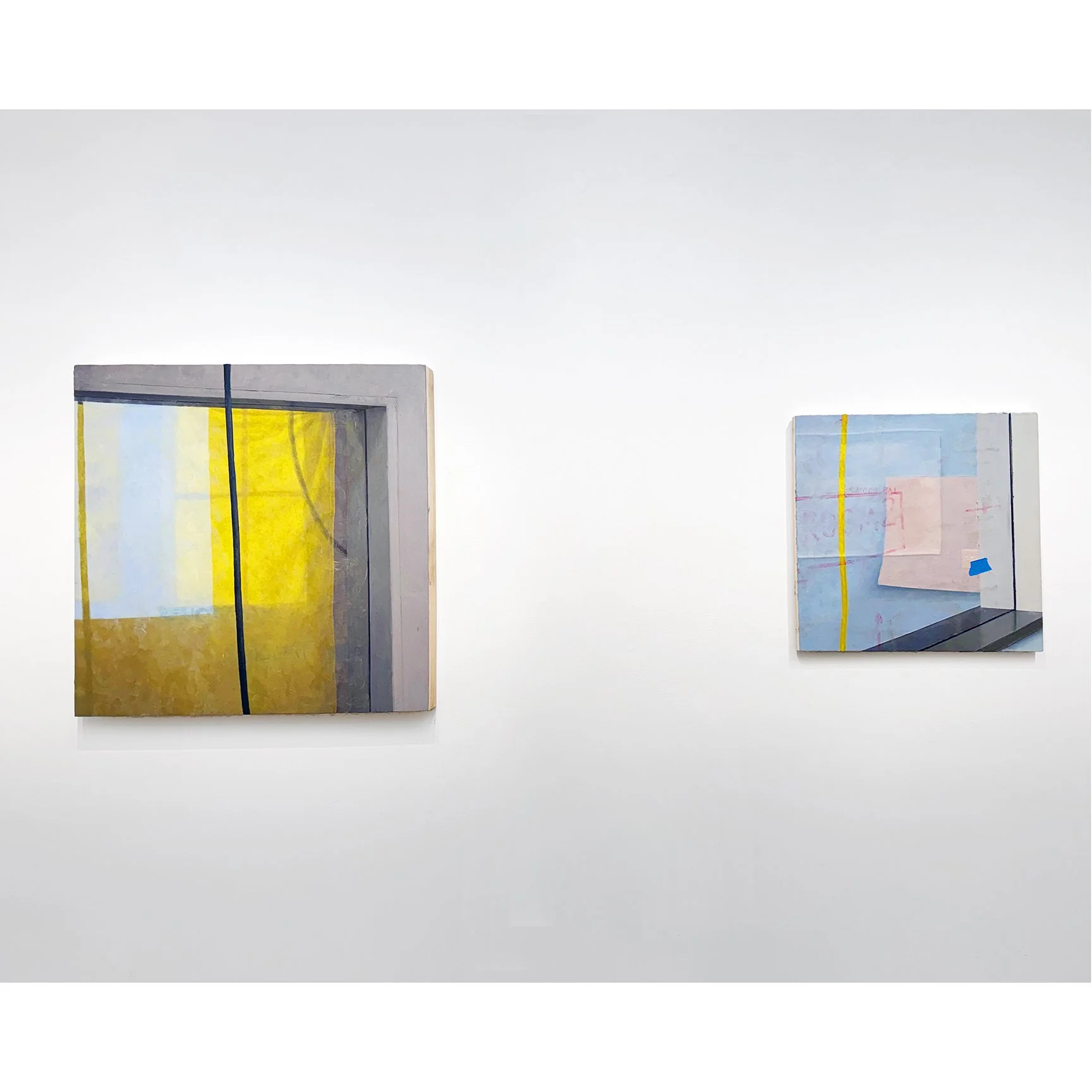
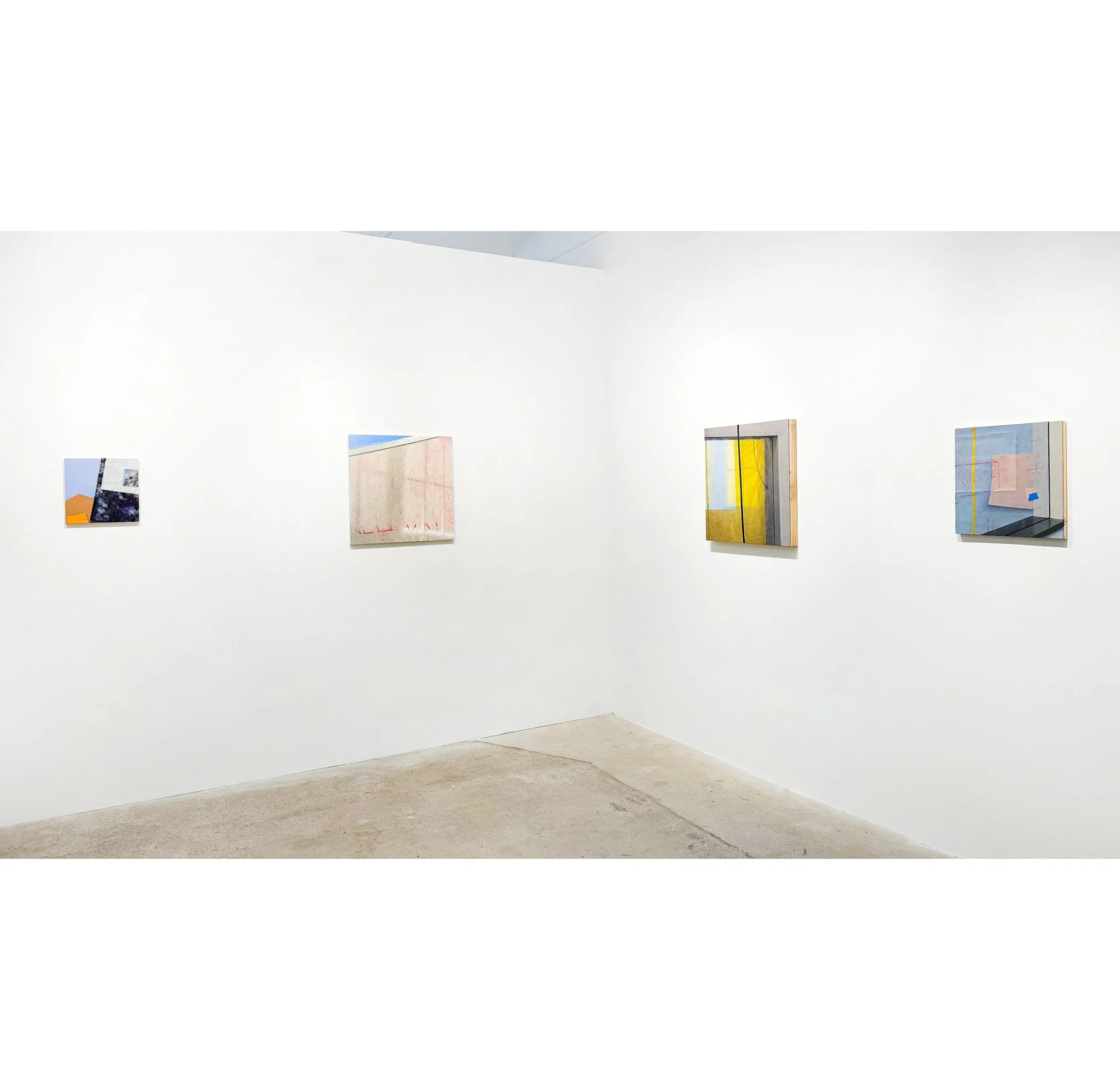
Satchel Projects is pleased to present Manual Entry, a solo exhibition of recent paintings by Clare Kambhu, on view from March 26 through April 25, 2026. The gallery will host an opening reception for the artist on Thursday, March 26 from 6 to 8 PM.
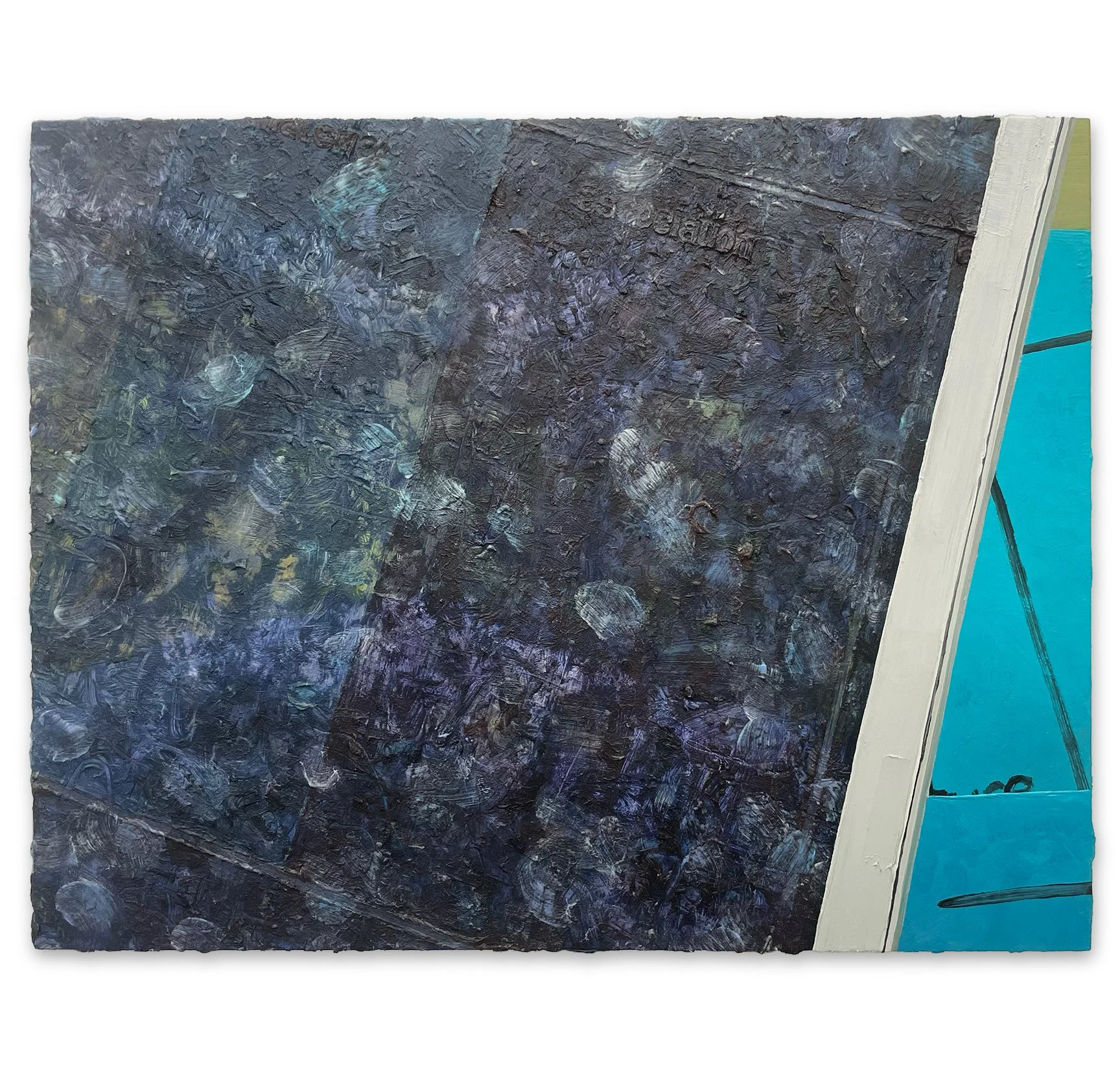
The works in Manual Entry continue Kambhu’s attentive painterly observations of the institutional spaces she inhabits on a daily basis. Extending an earlier body work created in public school classrooms, these new paintings arrive at a greater distillation, bordering on abstraction while maintaining representational legibility. Scale, cropping, and perspective are sensitively modulated to foreground the way conditions, setting, and heightened attention shape perception. While navigating institutional structures, she uses the act of seeing to transcend the mundane conditions of quotidian life, and to find signs of the human in an otherwise sterile and generic environment.
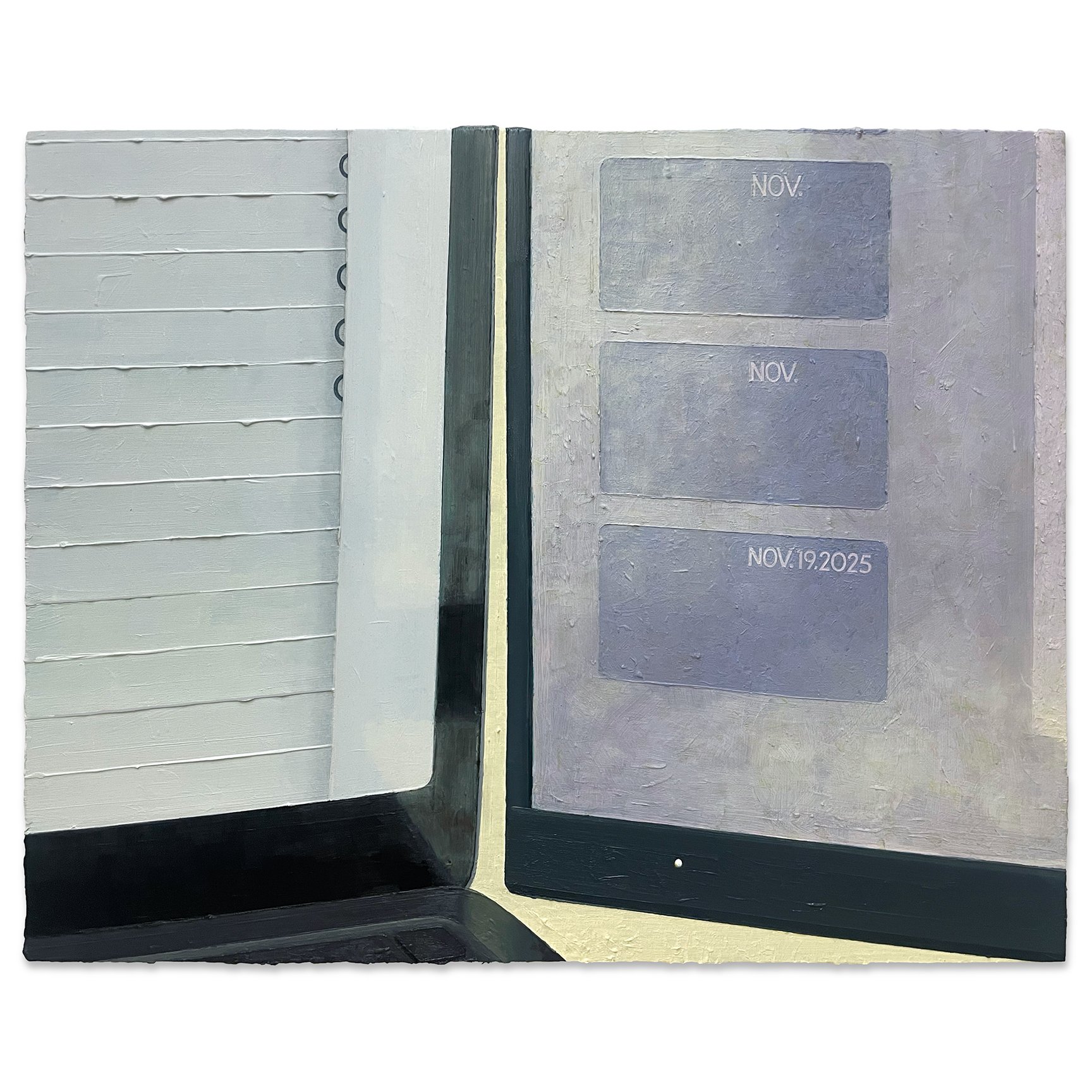
Within these settings, Kambhu acts as both participant and observer, attentive to visual and metaphorical moments of contradiction. Systems intended to foster human creativity and development can paradoxically constrain it through efforts to codify and universalize. This absurdity is exemplified by a bureaucratic memo titled “Action Required,” or an email about how to deal with spam that is, itself, a type of spam. Kambhu’s treatment of these text-based objects and images becomes durational, a meticulous process requiring the artist to “clock in” as she painstakingly recreates their typographical passages in paint.
When looking at a whiteboard or computer monitor, Kambhu is drawn to the interplay between surface, reflection, and depth. In her words, “I can’t help but notice the banal and strange moments when things overlap and intervene with each other in my daily life.” In Dry Erase 2 (we will learn), for example, layers of semi-erased handwritten text on a whiteboard interact with the luminous reflections and soft shadows of an adjacent paned window. Kambhu is fascinated by the way “spaces and objects that have been used over and over again acquire an accumulation of marks and a patina, like fingerprints on a computer screen or on a dirty window.” She sees these marks as traces, a record of human interaction, and her corresponding brushstrokes are an answer to these traces, leaving analogous marks within the painted field.
This intensively considered approach to painting takes time and sustained focus. Alert to intriguing “found” situations and accidental arrangements in her environment, Kambhu often begins by making small interventions and adjustments to intensify relationships, and to charge familiar places and objects with narrative potential. Surfaces are built up over successive sessions, worked and adjusted dialectically. In her words, “My process involves multiple layers of back-and-forth between creating an illusion and interrupting it, creating an illusion and interrupting it. Ultimately I’m happiest when those two things feel locked into each other.”
Kambhu’s paintings contain nods to both art historical and contemporary references. In Renovate, for example, golden-hour light and simultaneous contrast transform an otherwise mundane image of bland, “excuse-our-appearance” renovation into a moment of color-field transcendence. In Scope and Sequence, blocked-in calendar dates clearly echo the date paintings of On Kawara. Reflecting on this reference, she notes, “Repeating the date over and over can be so expansive and beautiful in one context but totally heinous in another — and the fact that those two things are both true is strange and interesting to me.” Conceptually, Kambhu’s work can be considered in relation to Peter Halley’s “cell and conduit” paintings and Mike Kelley’s Educational Complex on the one hand, and formally to Josephine Halvorson’s plein-air manifestations of place and Catherine Murphy’s meticulously observed compositions on the other. In Kambhu's paintings, the ordinary structures of institutional life are mined for meaning, as sites where the close observation of everyday space and the conceptual logic of systems converge, illuminating the human within the structural.
Clare Kambhu divides her time between New York City and northwestern Pennsylvania. Solo and two-person shows include Weyers-Sampson Gallery, Greenville, PA; the Garner Art Center, Garner, NY; Transborder Art, Governors Island, NY; and Office Space Gallery, Salt Lake City, UT. Group exhibitions include Authority Problem, Satchel Projects, New York; 30 Days of Culture Shock, apexart, New York, NY; Bronx Calling: The Fifth AIM Biennial, The Bronx Museum, Bronx, NY; and Super/Natural, ArtSpace New Haven, among others. She was a Hirshhorn Museum 50th Anniversary Honoree (2024), the recipient of Elizabeth Greenshields Foundation Grant (2024), and has been awarded fellowships by apexart (2022), The Bronx Museum (2019), and The Art & Law Program (2018). Her work has been discussed in publications including Bomb Magazine, Whitehot Magazine,artnet.com, and Smithsonian Magazine. She is an assistant professor of art at Allegheny College and holds an MFA from Yale University.